AI technologies

Artificial intelligence (AI) technologies can solve problems on their own without human intervention. AI could improve production efficiency, safety and quality in almost every industry.

We have updated the data in this list since we first published it in 2021. Find previous datasets in the National Library of Australia’s Trove website archive.
Example technologies

  • Machine learning, including neural networks and deep learning
  • AI algorithms and hardware accelerators
  • Natural language processing, including speech and text recognition, analysis and generation

Example applications

These technologies can be used for:

  • facial recognition and detection
  • automating manual processes
  • virtual assistants
  • advanced cyber security
  • automatically classifying objects in images
  • reliable self-driving vehicles
  • neuromorphic computing (computers modelled on the human brain and nervous system)
  • rapid data analysis
  • better traffic management
  • automated investing (using computer algorithms to generate tailored financial advice for people).

Research trends

Australia’s research strengths in critical technologies underpin new economic opportunities and sovereign capabilities.

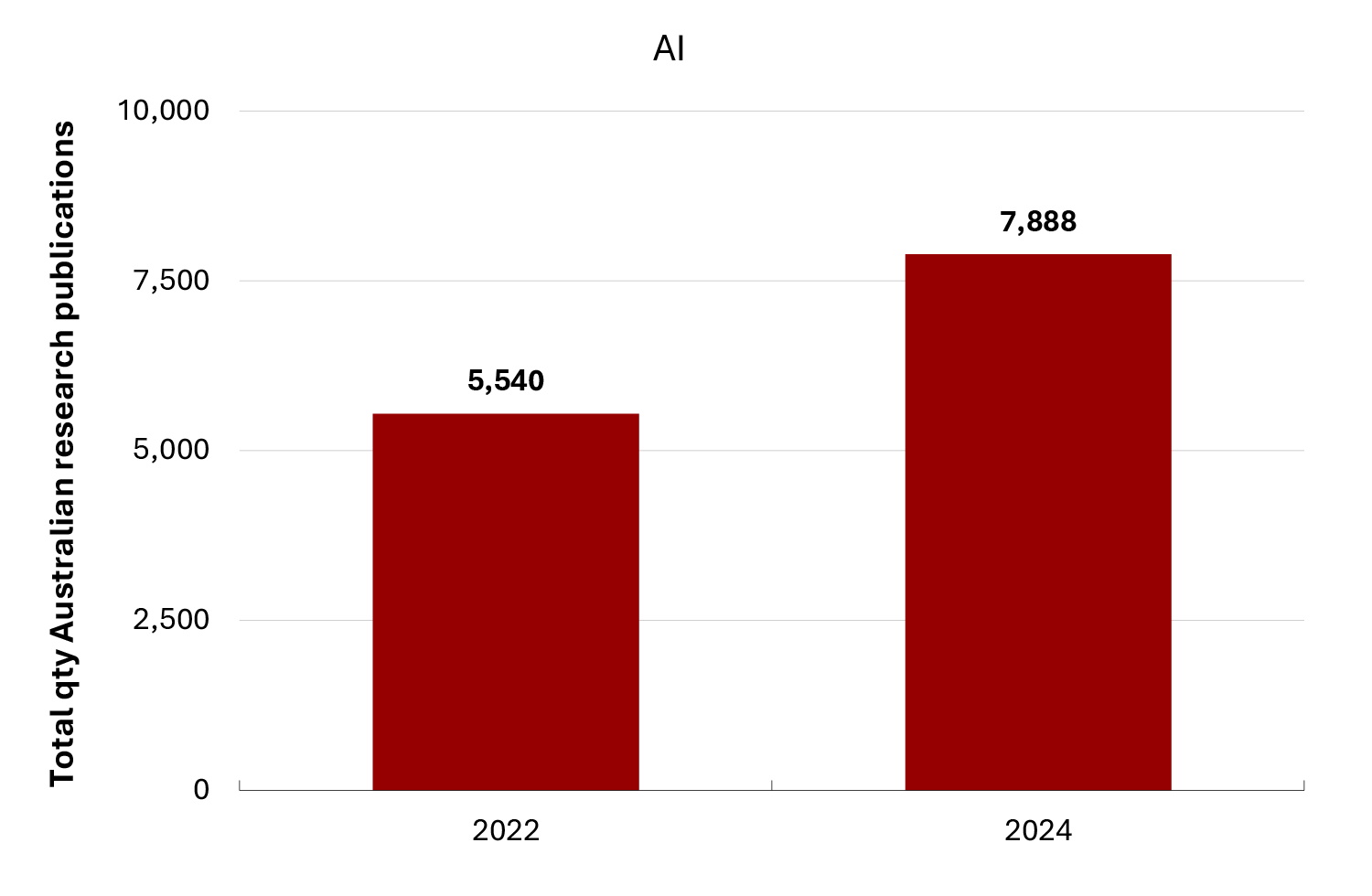
From 2022 to 2024, Australia’s research trends are consistent across critical technology fields, with AI seeing a notable increase in publications. 

Research quality increased slightly from 2022 to 2024. We define quality as the percentage of publications in the top 10% most cited publications in the field.

Research specialisation increased slightly from 2022 to 2024. We define specialisation as the ratio of the share of a field in the publications that come from a given country to the share of the same field in the global total of publications.

See next tab.

Australian research publications for AI technologies field, 2022–2024. 

Total quantity of Australian publications in AI
  2022 2024
Publications 5540 7888

Patent trends 

Intellectual property (IP) rights are vital to help support the translation of critical technology research outcomes into products, businesses and new capabilities. 

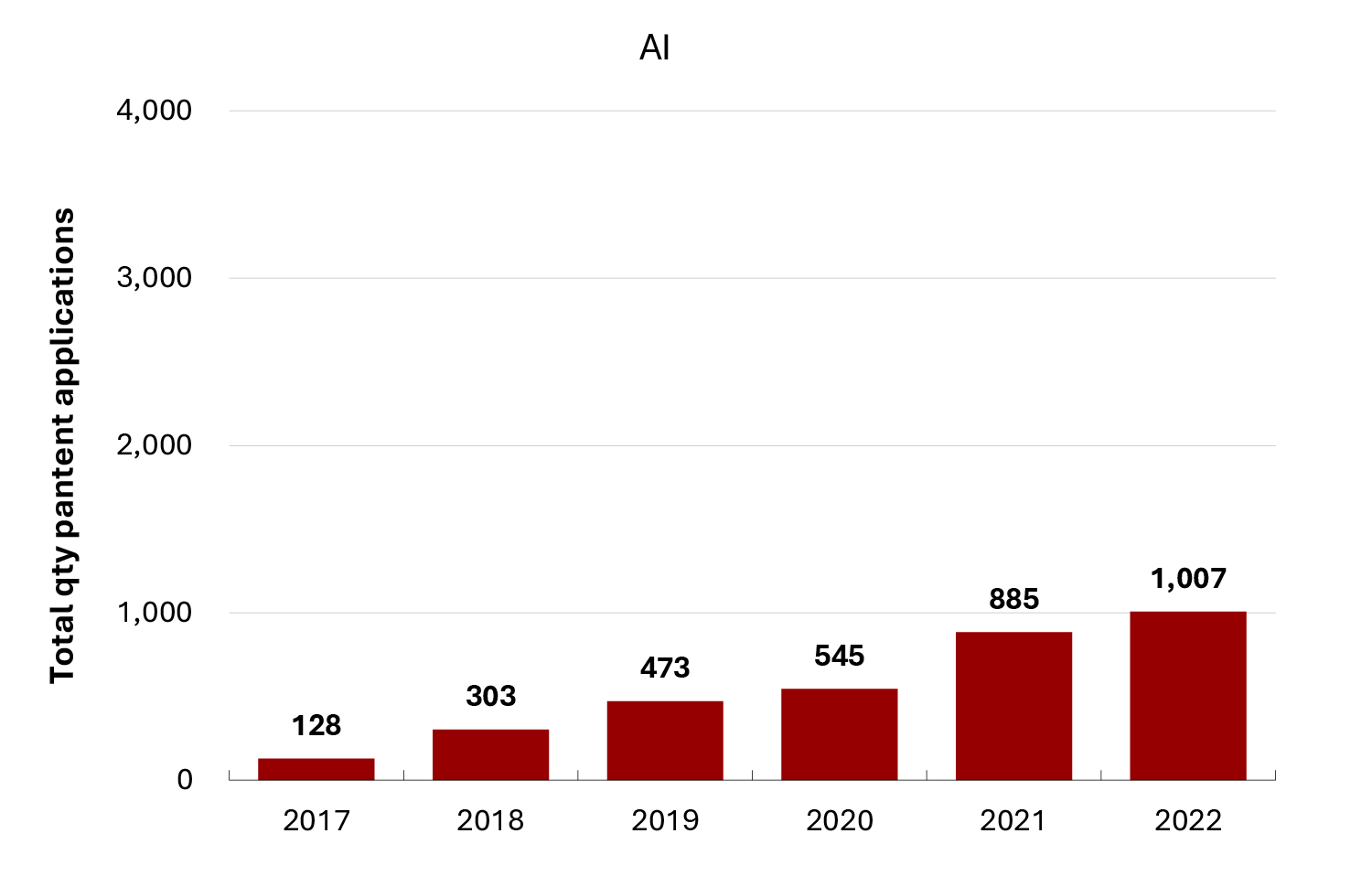
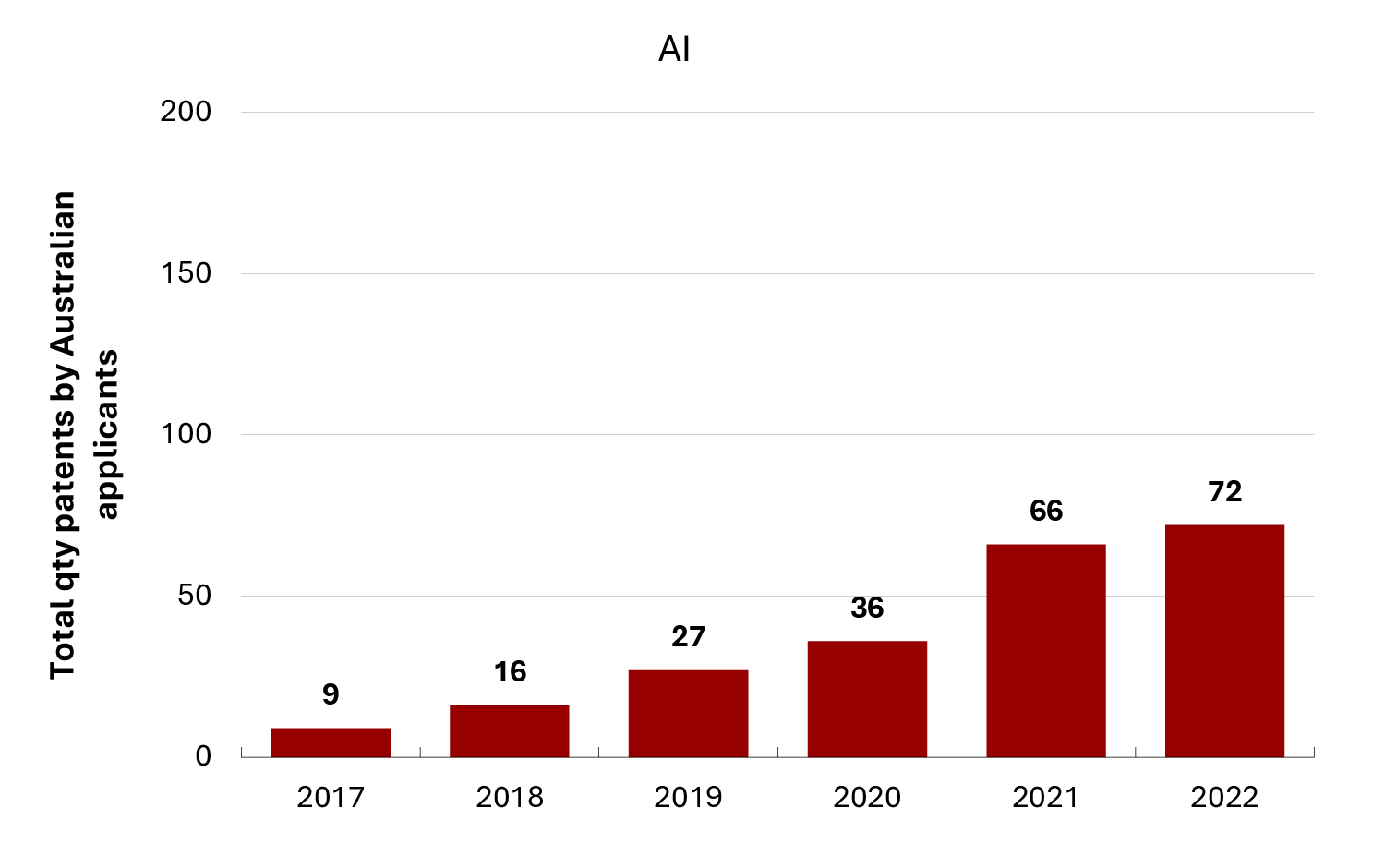
AI (standard) patent applications and AI (standard) patent applications by Australian applicants grew consistently from 2017 to 2022. 

See next tab.

AI technologies (standard) patent applications in Australia, 2017–2022.

AI technologies (standard) patent applications in Australia, 2017–2022
  2017 2018 2019 2020 2021 2022 % growth
Patent applications 128 303 473 545 885 1007 686.72
See next tab.

AI technologies Australian applicant (standard) patent applications in Australia, 2017–2022.

AI technologies Australian applicant (standard) patent applications in Australia, 2017–2022
  2017 2018 2019 2020 2021 2022
Patent applications 9 16 27 36 66 72

Venture capital trends 

Venture capital (VC) investment data can help assess Australia’s critical technology capability. The data acts as a real-time signal of where private investment is supporting innovation. 

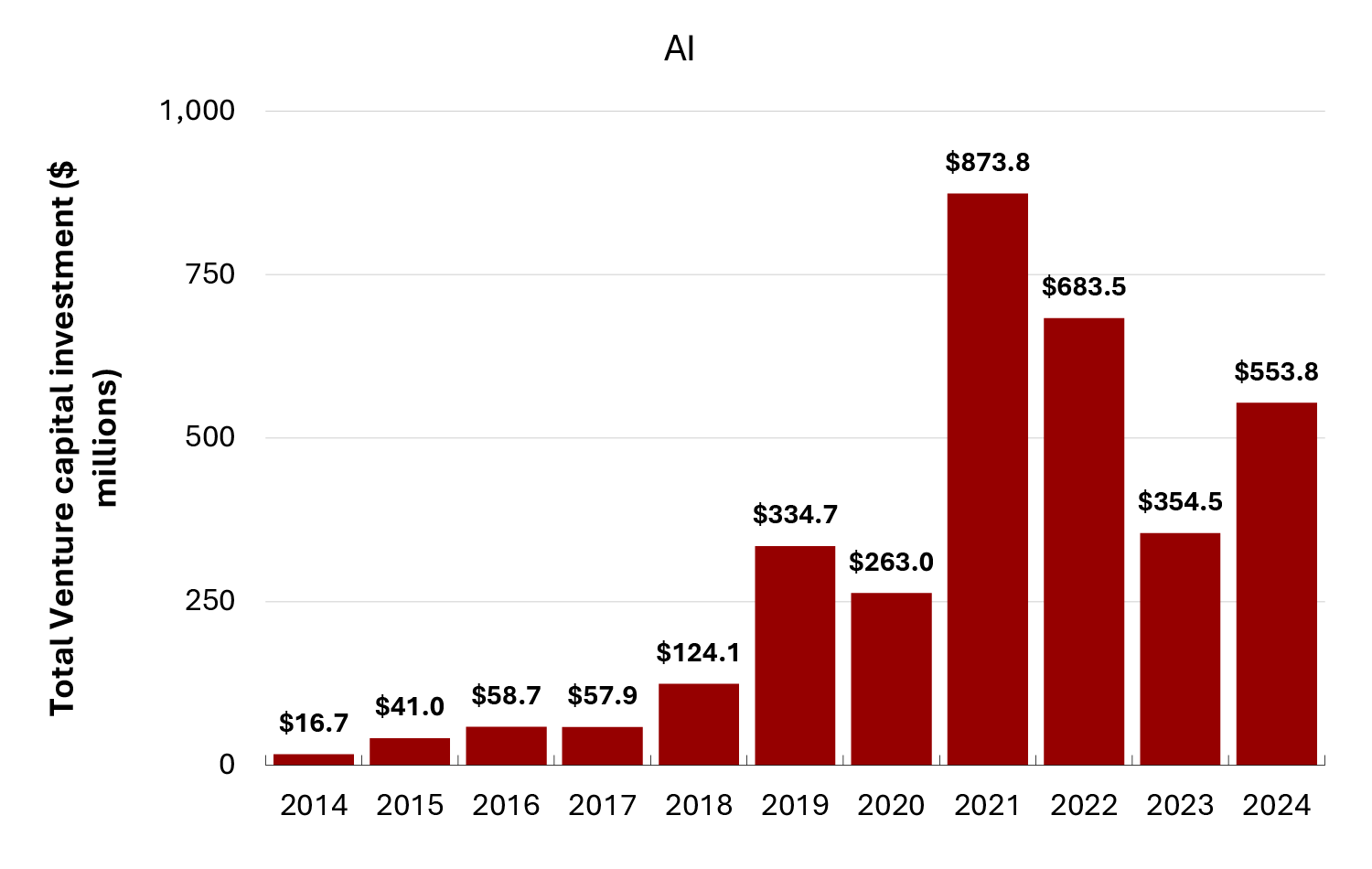
Overall VC investment in Australian increased from $355 million in 2023 to $554 million in 2024. This reflects how fast AI has grown from near zero in 2014 to around 26% of VC activity across all critical technology fields in 2024.

See next tab.

Venture capital investment in Australian AI technologies firms, 2014–2024.

Venture capital investment in Australian AI technologies firms, 2014–2024
Year VC investment in $millions
2014 16.69
2015 41.04
2016 58.71
2017 57.85
2018 124.14
2019 334.65
2020 263.02
2021 873.78
2022 683.49
2023 354.53
2024 553.83
Total 3361.73

The future

Australia must continue to improve its AI capability so we can:

  • become a world-leading digital economy
  • enable more inclusive job opportunities
  • help industry and governments reduce costs, improve efficiency and productivity, and be more competitive 
  • use data to make better decisions
  • counter national security threats and improve our nation’s defence with smarter military systems and operations.

Australia is focusing on 3 areas of AI to transform existing industries and build new ones:

  • AI for better health, aged care and disability services
  • AI for better towns, cities and infrastructure
  • AI for better natural resource management.

Data sources

CSIRO collected all publication data from Web of Science systems and covers 2022 and 2024.

We sourced all patent data from IP Australia. The data covers 2017 to 2022 for standard patent applications filed in Australia. It does not include innovation patents, following a 2022 review phasing them out. We note innovation filings were on the rise during this period, which led to a spike in the years leading up to ceasing. 

DISR collected all VC data in March 2025 using Pitchbook and covers 2014 to 2024.