Quantum technologies

Quantum technologies take advantage of the way matter and light behave at atomic and subatomic scales. Quantum mechanical properties (like entanglement, superposition and tunnelling) can be used to build advanced technologies that would otherwise be impossible.

We have updated the data in this list since we first published it in 2021. Find previous datasets in the National Library of Australia’s Trove website archive.
Example technologies

  • Quantum computing
  • Post-quantum cryptography
  • Quantum communications
  • Quantum sensors

Example applications

These technologies can be used for:

  • improved data security, management and analysis
  • modelling and simulation to discover new drugs and next-generation materials
  • quantum networks that increase computing capability
  • optimising logistics and utilities sectors such as energy, waste management and banking
  • improving measurement accuracy, including for sea water levels and underground water tables
  • underground leak and earthquake detection
  • medical imaging
  • mineral detection.

Research trends

Australia’s research strengths in critical technologies underpin new economic opportunities and sovereign capabilities.

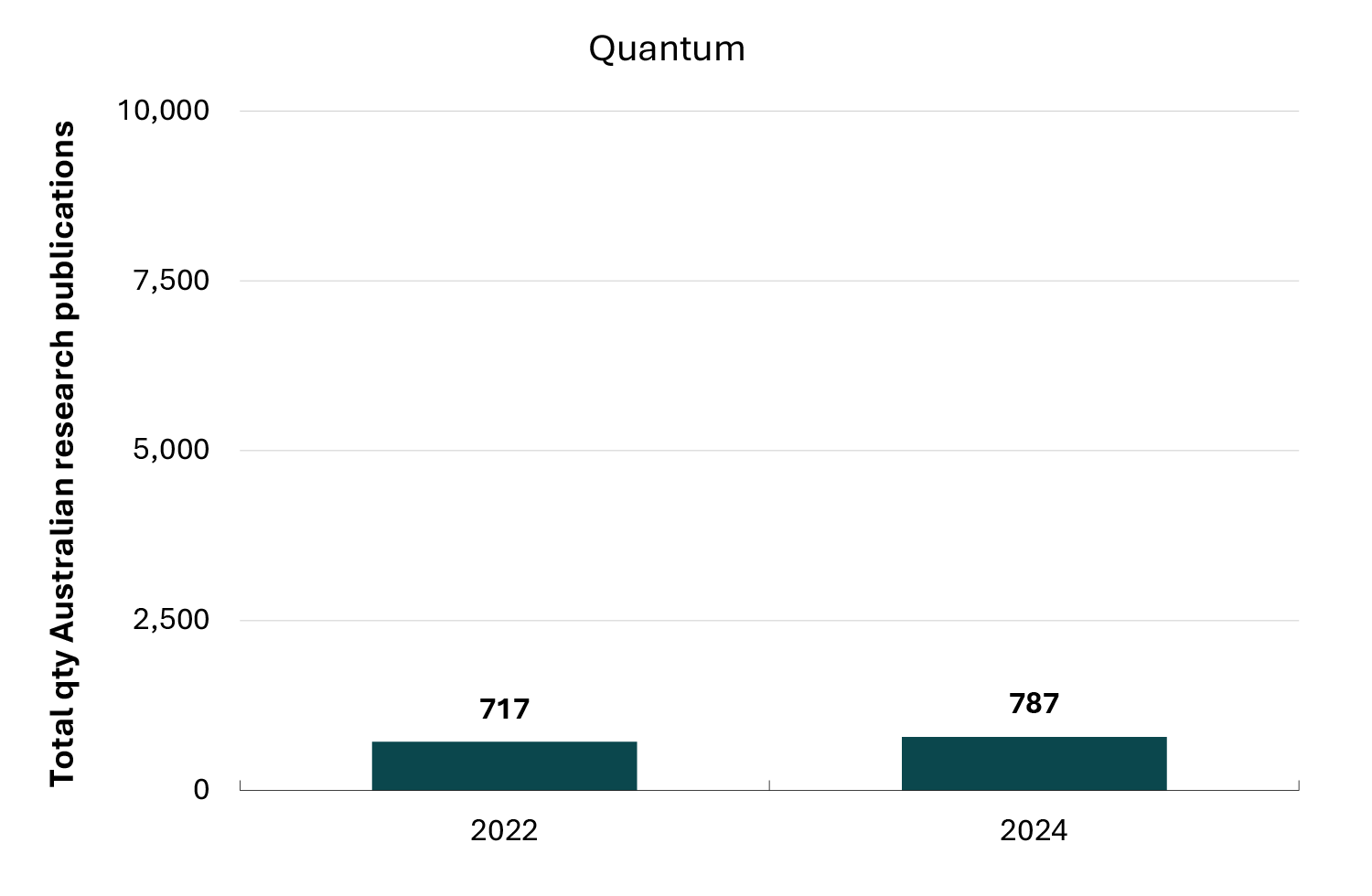
From 2022 to 2024, Australia’s research trends are consistent across critical technology fields, with quantum seeing a slight increase in publications. 

Research quality increased from 2022 to 2024. We define quality as the percentage of publications in the top 10% most cited publications in the field. 

Research specialisation remained the same from 2022 to 2024. We define specialisation as the ratio of the share of a field in the publications that come from a given country to the share of the same field in the global total of publications.

See next tab.

Australian research publications for quantum technologies field, 2022–2024.

Total quantity of Australian publications in quantum
  2022 2024
Publications 717 787

Patent trends 

Intellectual property (IP) rights are vital to supporting translation of critical technology research outcomes into products, businesses and new capabilities. 

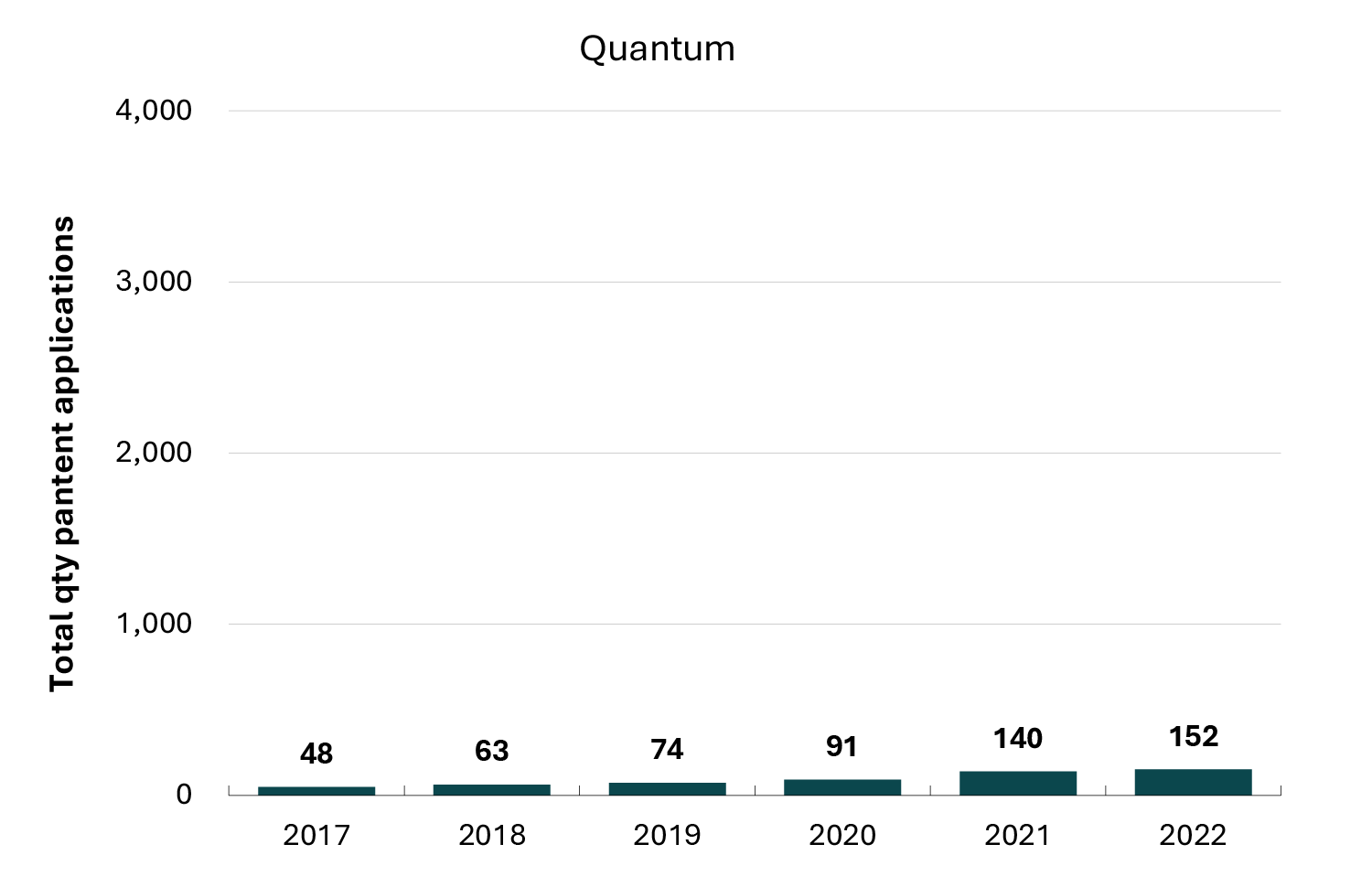
Quantum (standard) patent applications tripled from 2017 to 2022.

See next tab.

Quantum technologies (standard) patent applications in Australia, 2017–2022.

Quantum technologies (standard) patent applications in Australia, 2017–2022
  2017 2018 2019 2020 2021 2022 % growth
Patent applications 48 63 74 91 140 152 216.67

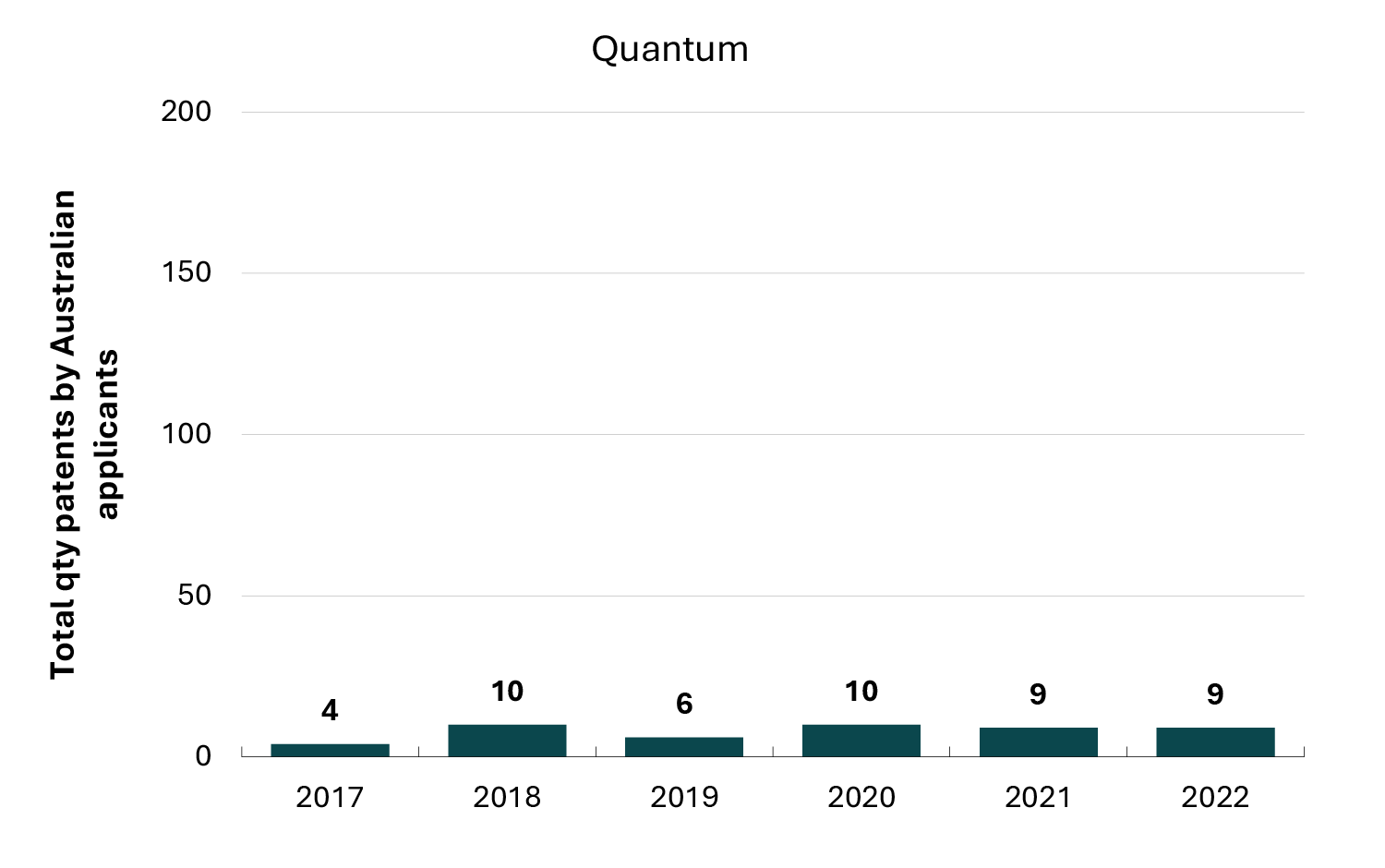
Quantum (standard) patent applications by Australian applicants nearly doubled from 2017 to 2022, bouncing back from a decrease in 2019.

See next tab.

Quantum technologies Australian applicant (standard) patent applications in Australia, 2017–2022.

Quantum technologies Australian applicant (standard) patent applications in Australia, 2017–2022
  2017 2018 2019 2020 2021 2022
Patent applications 4 10 6 10 9 9

Venture capital trends 

Venture capital (VC) investment data can help assess Australia’s critical technology capability. The data acts as a real-time signal of where private investment is supporting innovation.

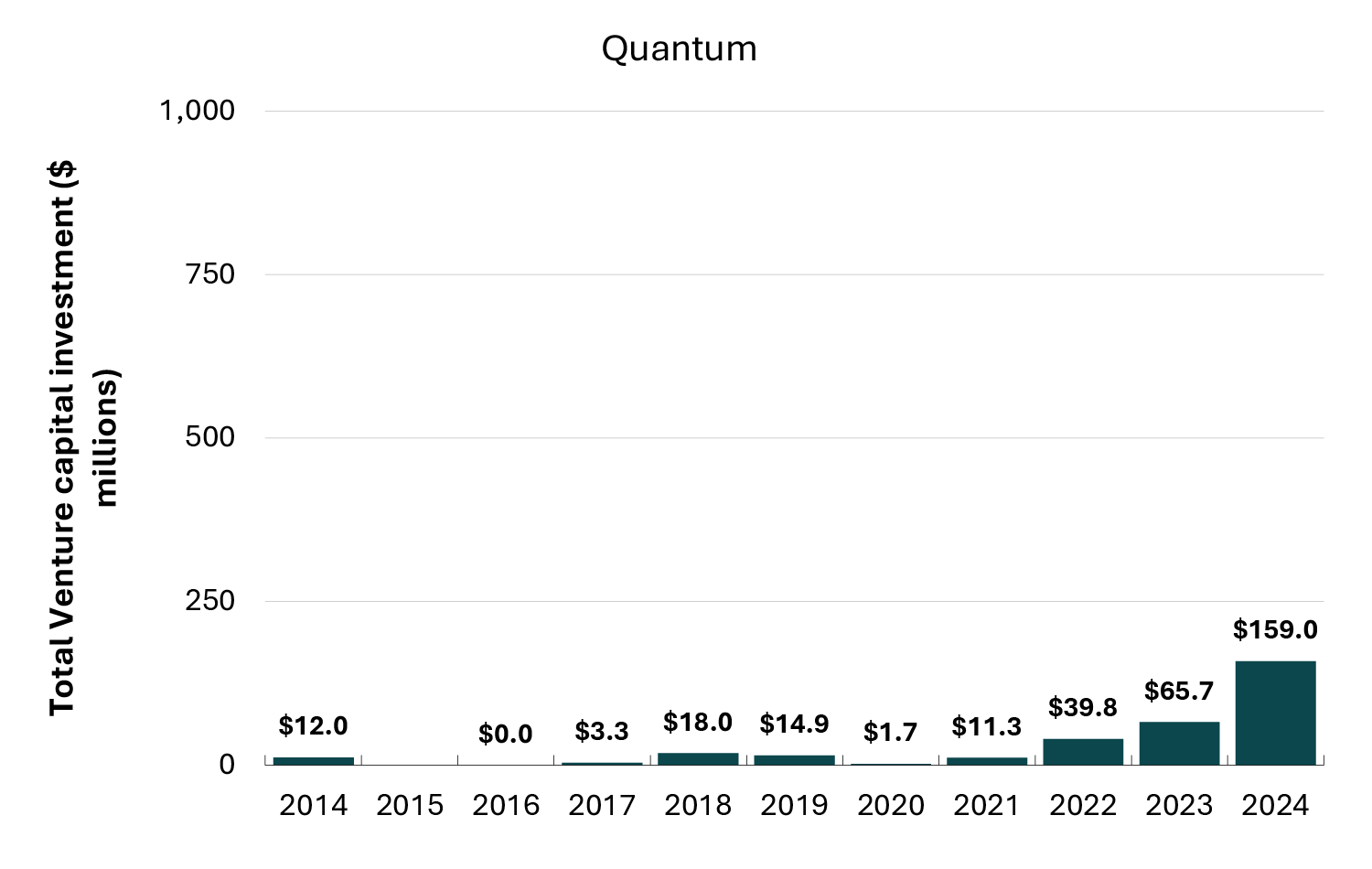
Quantum investment more than doubled from about $65 million in 2023 to roughly $160 million in 2024. The Australian and Queensland Government’s investment in PsiQuantum has partly attributed to this increase.

See next tab.

Venture capital investment in Australian quantum technologies firms, 2014–2024.

Venture capital investment in Australian quantum technologies firms, 2014–2024
Year VC investment in $millions
2014 12
2015  
2016 0
2017 3.3
2018 18.04
2019 14.88
2020 1.73
2021 11.31
2022 39.83
2023 65.66
2024 159.02
Total 325.77

The future

While our quantum sector is smaller than those of China and the United States, we can have a leading role in the global industry by:

  • building on our research strengths and world-class quantum talent
  • catering to niche markets such as quantum sensing in resources and space exploration
  • manufacturing more quantum technologies in Australia.

Data sources

CSIRO collected all publication data from Web of Science systems and covers 2022 and 2024.

We sourced all patent data from IP Australia. The data covers 2017 to 2022 for standard patent applications filed in Australia. It does not include innovation patents, following a 2022 review phasing them out. We note innovation filings were on the rise during this period, which led to a spike in the years leading up to ceasing. 

DISR collected all VC data in March 2025 using Pitchbook and covers 2014 to 2024.