Biotechnologies

Biotechnologies harness cellular and biomolecular processes to improve our health, wellbeing, economy and environment. This field includes synthetic biology, which constructs or redesigns biological components and systems to have useful new abilities by editing their DNA.

We have updated the data in this list since we first published it in 2021. Find previous datasets in the National Library of Australia’s Trove website archive.
Example technologies

  • Synthetic biology, including biological manufacturing
  • Neural engineering and brain–computer interfaces
  • Genome and genetic sequencing and analysis
  • Vaccines and medical countermeasures
  • Novel medicines, including nuclear, antiviral and antibiotic

Example applications

These technologies can be used for:

  • improving how we prepare for and respond to pandemics
  • advanced diagnostic and therapeutic targeting
  • engineering cells and enzymes that clean up environmental pollutants and recycle plastics
  • engineering microorganisms to recover metals from ores and waste materials
  • better disease treatments
  • sustainable agriculture
  • food and animal tracing
  • preventing plant and livestock disease.

Research trends

Australia’s research strengths in critical technologies underpin new economic opportunities and sovereign capabilities.

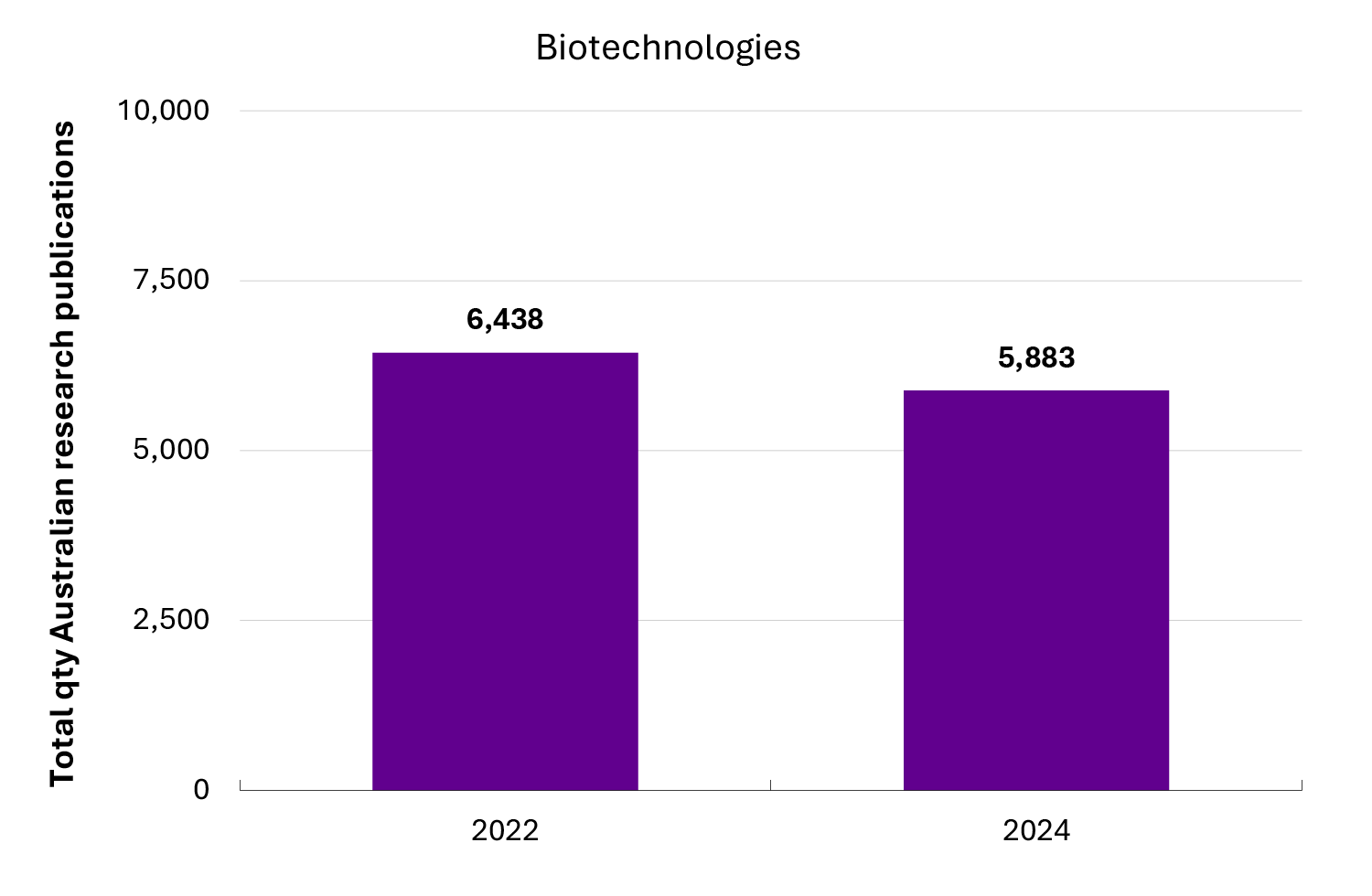
From 2022 to 2024, Australia’s research trends are consistent across critical technology fields, with biotechnologies the only field to see a decrease in publications. 

Research quality and research specialisation remained the same from 2022 to 2024. We define quality as the percentage of publications in the top 10% most cited publications in the field. We define specialisation as the ratio of the share of a field in the publications that come from a given country to the share of the same field in the global total of publications.

See next tab.

Australian research publications for biotechnologies field, 2022–2024.

Total quantity of Australian publications in biotechnology
  2022 2024
Publications 6438 5883

Patent trends 

Intellectual property (IP) rights are vital to supporting translation of critical technology research outcomes into products, businesses and new capabilities. 

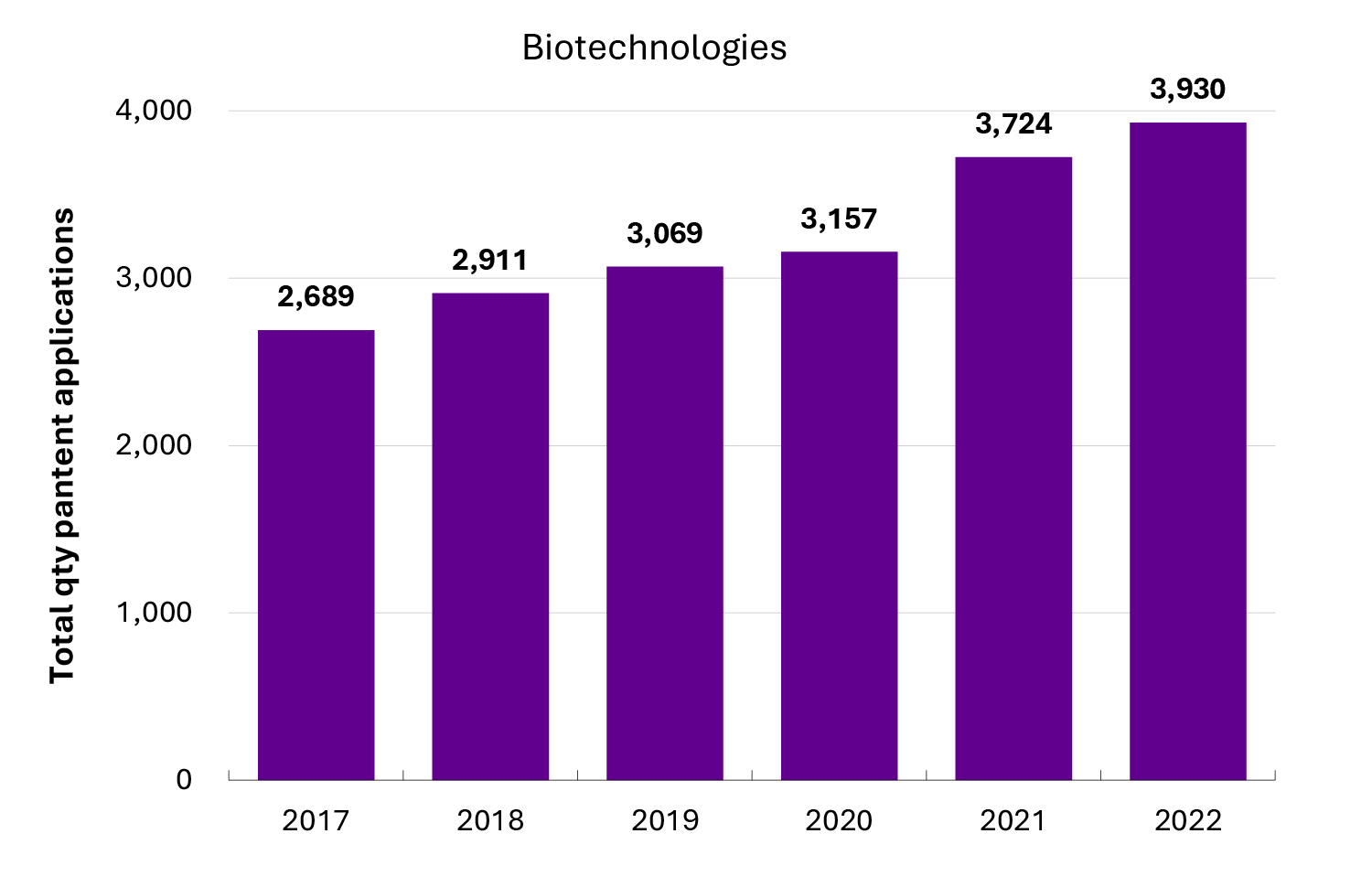
Biotechnologies (standard) patent applications increased steadily from 2017 to 2022. 

See next tab.

Biotechnologies (standard) patent applications in Australia, 2017–2022.

Biotechnologies (standard) patent applications in Australia, 2017–2022
  2017 2018 2019 2020 2021 2022 % growth
Patent applications 2689 2911 3069 3157 3724 3930 46.15

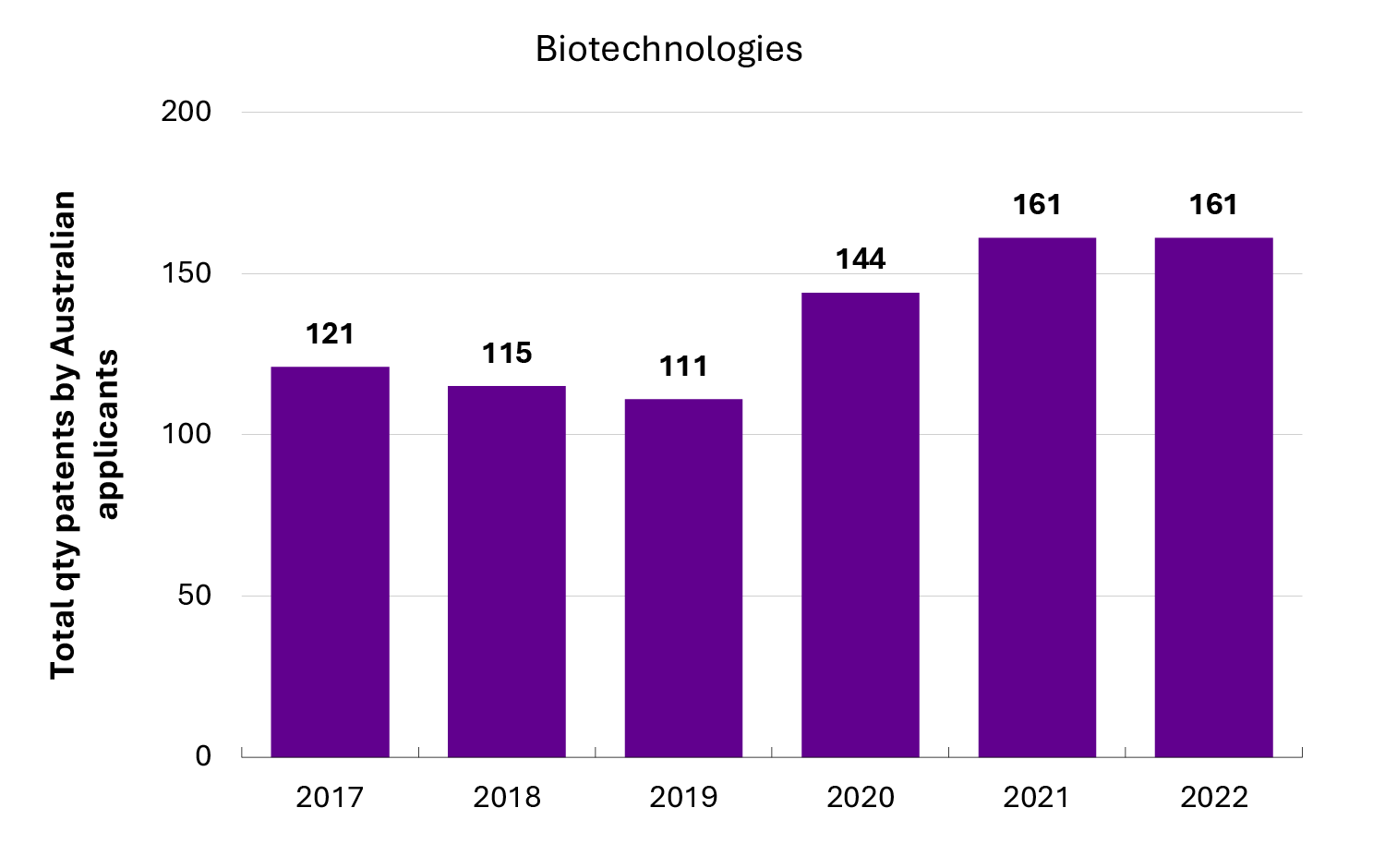
Biotechnologies (standard) patent applications by Australian applicants increased from 2017 to 2022, with a slight decrease in 2019.

See next tab.

Biotechnologies Australian applicant (standard) patent applications in Australia, 2017–2022.

Biotechnologies Australian applicant (standard) patent applications in Australia, 2017–2022
  2017 2018 2019 2020 2021 2022
Patent applications 121 115 111 144 161 161

Venture capital trends 

Venture capital (VC) investment data can help assess Australia’s critical technology capability. The data acts as a real-time signal of where private investment is supporting innovation.

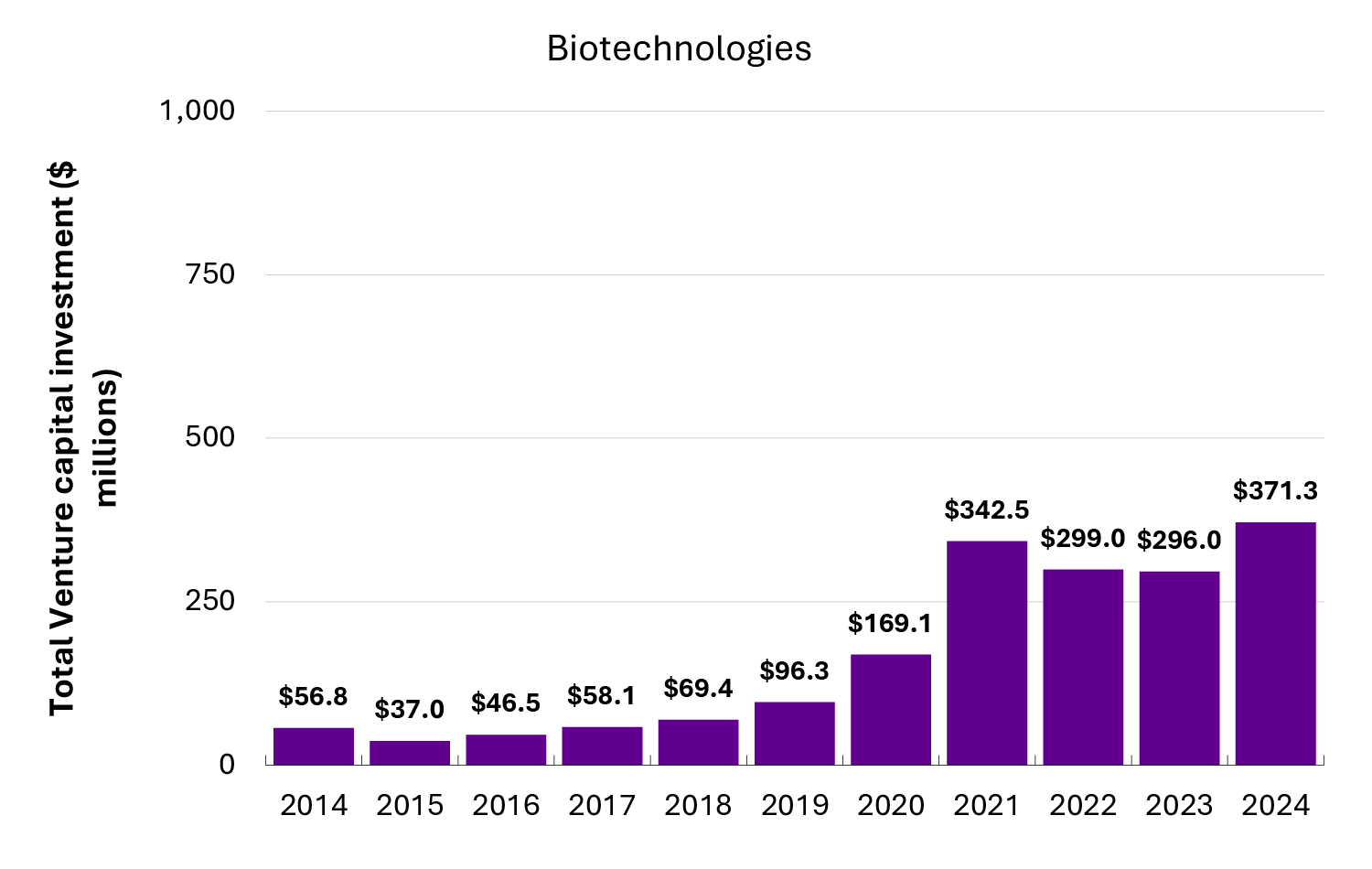
Investment in biotechnologies increased from about $296 million in 2023 to roughly $371 million in 2024, reflecting consistent growth. 

See next tab.

Venture capital investment in Australian biotechnologies firms, 2014–2024.

Venture capital investment in Australian biotechnologies firms, 2014–2024
Year VC investment in $millions
2014 56.8
2015 37
2016 46.53
2017 58.12
2018 69.41
2019 96.31
2020 169.13
2021 342.49
2022 299.03
2023 295.99
2024 371.32
Total 1842.13

The future

To remain a leader in biotechnologies, Australia needs to build strong international partnerships and trade relationships.

This will ensure we can keep developing biotechnologies to:

  • solve environmental and agricultural challenges
  • improve manufacturing efficiency
  • protect Australians from disease and bioterrorism
  • improve our quality of life.

Data sources

CSIRO collected all publication data from Web of Science systems and covers 2022 and 2024.

We sourced all patent data from IP Australia. The data covers 2017 to 2022 for standard patent applications filed in Australia. It does not include innovation patents, following a 2022 review phasing them out. We note innovation filings were on the rise during this period, which led to a spike in the years leading up to ceasing. 

DISR collected all VC data in March 2025 using Pitchbook and covers 2014 to 2024.