Autonomous systems, robotics, positioning, timing and sensing

This group of technologies includes robots and other machines that perform tasks on their own with limited guidance from humans. It also includes satellites and systems that precisely measure position, navigation or timing data.

We have updated the data in this list since we first published it in 2021. Find previous datasets in the National Library of Australia’s Trove website archive.
Example technologies

  • Advanced robotics
  • Autonomous systems operation technology
  • Drones, swarming and collaborative robots
  • Advanced imaging technology
  • Advanced sensor technologies
  • Satellite and positioning technologies
  • Advanced aerospace technologies, including propulsion, hypersonics and guidance systems
  • Nuclear technologies, including for submarine propulsion and waste management

Example applications

These technologies can be used for:

  • faster and more accurate surveying and mapping from the air and space
  • more reliable and accurate navigation in sectors like agriculture, aviation, construction, transport, and mining and resources
  • safer airline and maritime navigation
  • navigating without GPS
  • improving public safety
  • increasing productivity and securing our supply chains by using robots to manufacture more things in Australia
  • improving workforce safety and efficiency
  • increasing efficiency in agriculture 
  • reliable, efficient transport and logistics for land, sea, air and space
  • autonomous military applications
  • exploring other planets
  • improved animal welfare management.

Research trends

Australia’s research strengths in critical technologies underpin new economic opportunities and sovereign capabilities.

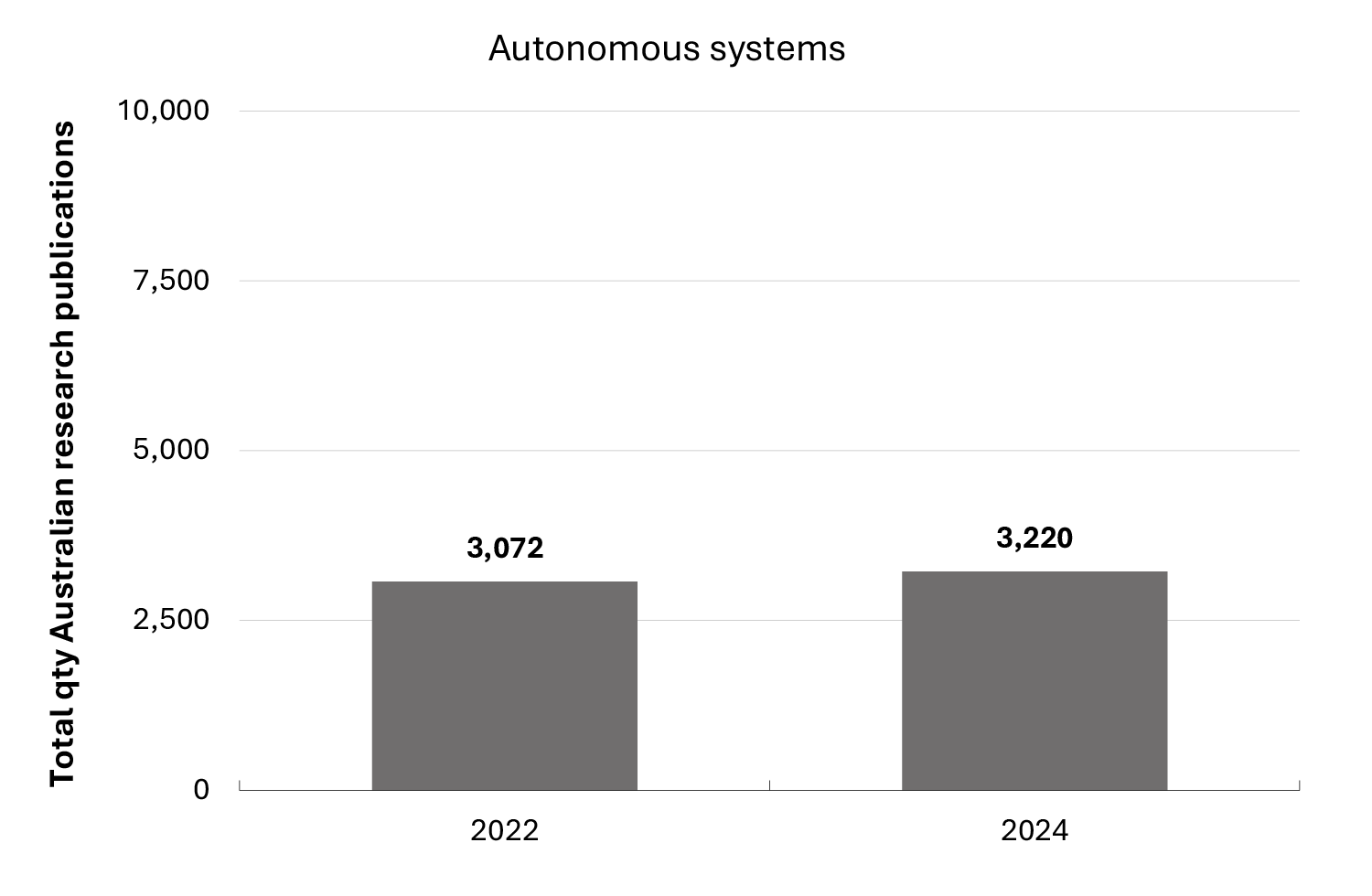
From 2022 to 2024, Australia’s research trends are consistent across critical technology fields. Autonomous systems, robotics, positioning, timing and sensing saw a slight increase in publications. 

Research quality increased slightly from 2022 to 2024. We define quality as the percentage of publications in the top 10% most cited publications in the field. 

Research specialisation decreased from 2022 to 2024. We define quality as the percentage of publications in the top 10% most cited publications in the field. 

See next tab.

Australian research publications for autonomous systems, robotics, positioning, timing and sensing technologies field, 2022–2024. 

Total quantity of Australian publications in autonomous systems
  2022 2024
Publications 3072 3220

Patent trends 

Intellectual property (IP) rights are vital to supporting translation of critical technology research outcomes into products, businesses and new capabilities. 

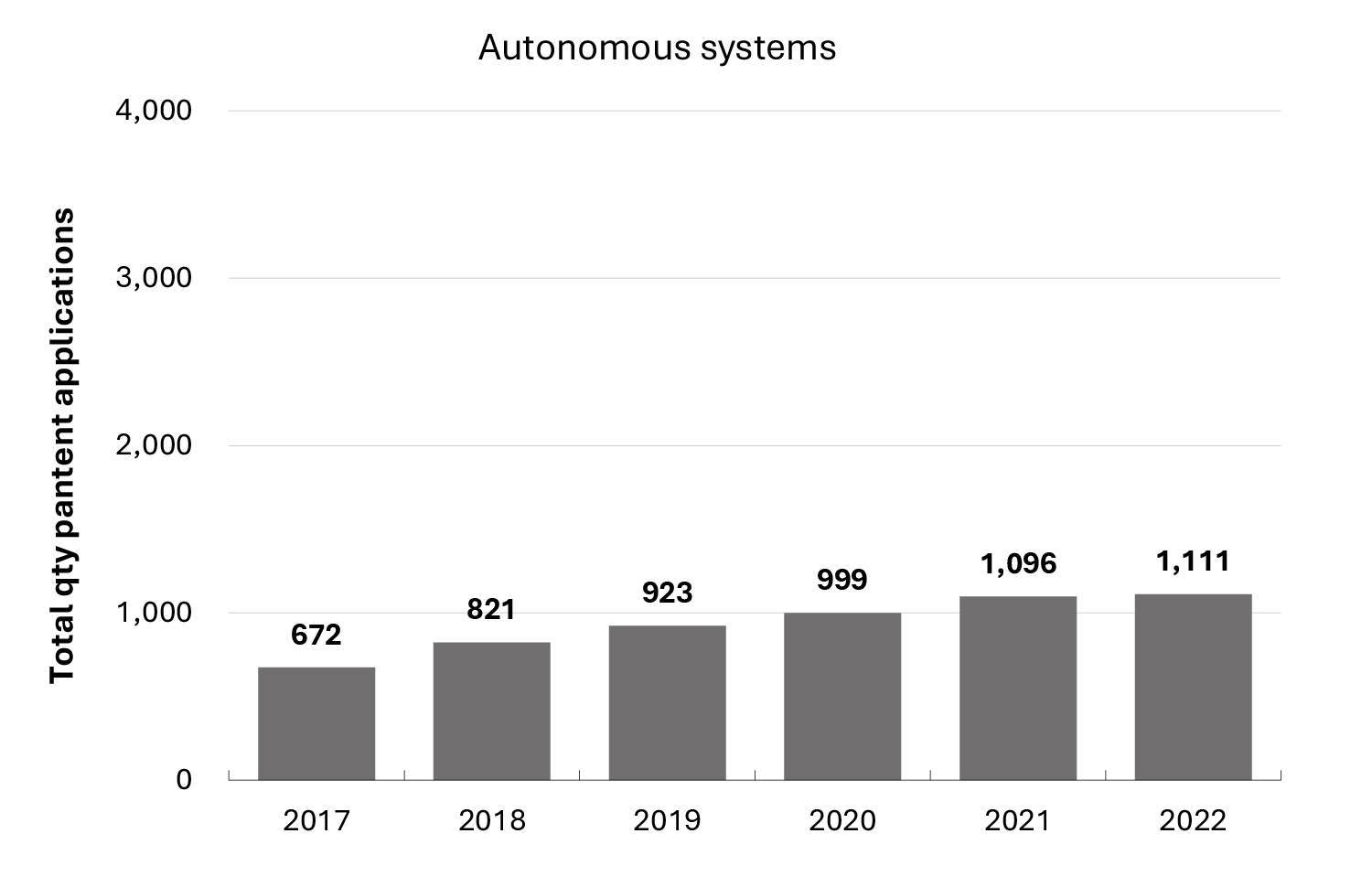
Autonomous systems, robotics, positioning, timing and sensing (standard) patent applications nearly doubled from 2017 to 2022. 

See next tab.

Autonomous systems, robotics, positioning, timing and sensing technologies (standard) patent applications in Australia, 2017–2022.

Autonomous systems technologies (standard) patent applications in Australia, 2017–2022
  2017 2018 2019 2020 2021 2022 % growth
Patent applications 672 821 923 999 1096 1111 65.33

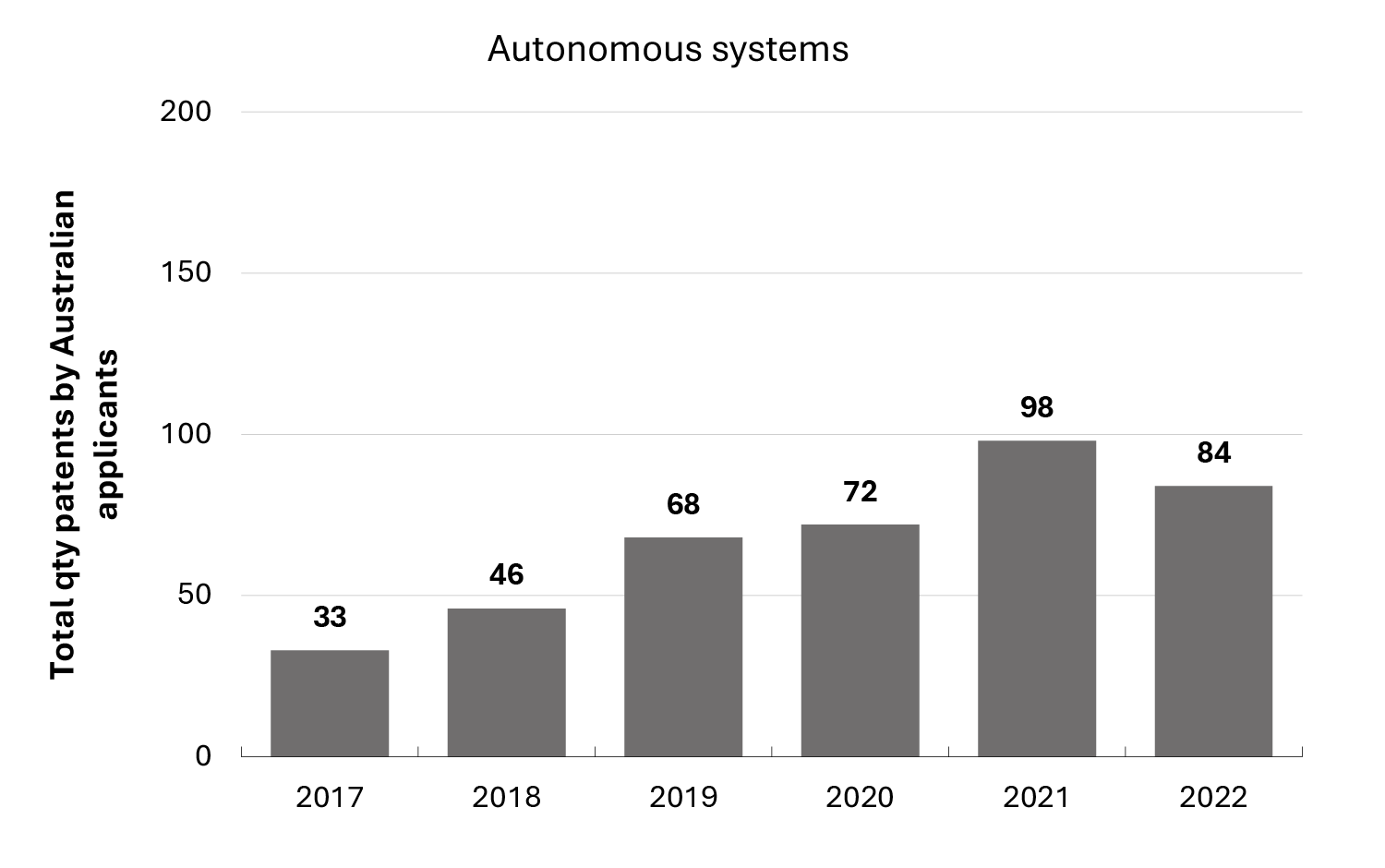
Autonomous systems, robotics, positioning, timing and sensing (standard) patent applications by Australian applicants tripled from 2017 to 2021, with a slight decrease in 2022.

See next tab.

Autonomous systems, robotics, positioning, timing and sensing technologies Australian applicant (standard) patent applications in Australia, 2017–2022.

Autonomous systems technologies Australian applicant (standard) patent applications in Australia, 2017–2022
  2017 2018 2019 2020 2021 2022
Patent applications 33 46 68 72 98 84

Venture capital trends 

Venture capital (VC) investment data can help assess Australia’s critical technology capability. The data acts as a real-time signal of where private investment is supporting innovation.

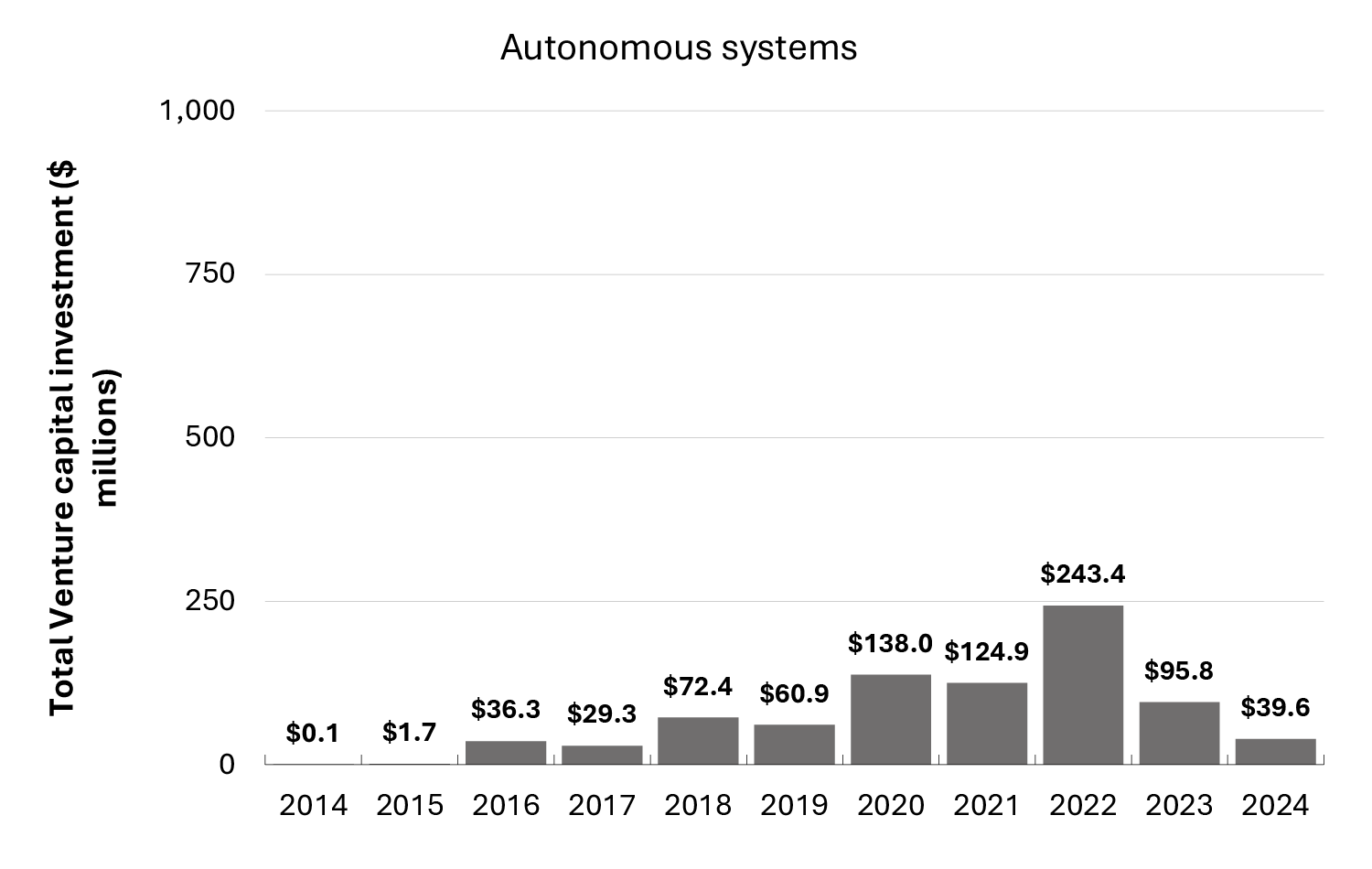
Overall VC investment in Australian autonomous systems, robotics, positioning, timing and sensing critical technology firms has decreased since 2022. 

See next tab.

Venture capital investment in Australian autonomous systems, robotics, positioning, timing and sensing technologies firms, 2014–2024.

Venture capital investment in Australian autonomous systems technologies firms, 2014–2024
Year VC investment in $millions
2014 0.09
2015 1.66
2016 36.25
2017 29.25
2018 72.42
2019 60.94
2020 138.02
2021 124.92
2022 243.38
2023 95.8
2024 39.61
Total 842.34

The future

Autonomous technologies can help Australia:

  • increase productivity in existing sectors
  • develop new industrial sectors and create jobs
  • manufacture more of our goods here in Australia.

However, there are some risks with social acceptance for these technologies, particularly the perceived threat of robots taking Australians’ jobs. We can reduce these risks and capture the benefits of autonomous technologies through public education, guidance and good governance.

Data sources

CSIRO collected all publication data from Web of Science systems and covers 2022 and 2024.

We sourced all patent data from IP Australia. The data covers 2017 to 2022 for standard patent applications filed in Australia. It does not include innovation patents, following a 2022 review phasing them out. We note innovation filings were on the rise during this period, which led to a spike in the years leading up to ceasing. 

DISR collected all VC data in March 2025 using Pitchbook and covers 2014 to 2024.