Transcript
[Music plays and an image of the Prime Minister’s Prize for Excellence in Science Teaching in Primary Schools medallion appears on the left. The Coat of Arms and text appears on the right: 2026 Prime Minister’s Prize for Excellence in Science Teaching in Primary Schools.]
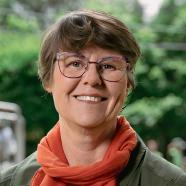
[Image changes to show the medallion in the centre and a photo of Dr Gabrielle Oslington on the right. Text appears beneath: Dr Gabrielle Oslington, BScAgr (Hons) BD MEd PhD.]
Dr Gabrielle Oslington: Children are natural scientists because from their very earliest moments, they're learning by experimenting.
[Image show ‘Arden’ Anglican School sign with the school’s crest and motto: ‘In God, my Joy’. This is followed by an image of Gabrielle wheeling a bike along a footpath and around a corner.]
Science doesn't need to be simply made fun. It doesn't need to be dumbed down. It needs to be made accessible.
[Image changes to show Gabrielle talking to the camera, and text appears: Dr Gabrielle Oslington.]
My name is Dr Gabrielle Oslington and I work at Arden Anglican School.
[Image changes to show Gabrielle talking to the camera, and then image changes to show Gabrielle working with a group of students at a table.]
I'm the Gifted and Talented Coordinator for students in Kindergarten to Year 6.
[Images show 2 students looking at Gabrielle pouring liquid into a measuring tube, students working around a table, and Gabrielle talking to the camera.]
I also work in extension programs and in mainstream mathematics with our classroom teachers.
[Images show Gabrielle pouring liquid into a measuring tube and students working together at a table. Images change to a student looking at an apple floating in a coffee plunger and then Gabrielle talking to the camera.]
I never use textbooks. We draw, we make, we build, we look at, we explore because that's how children best learn about their world.
[Images show Gabrielle with the students at a table doing an experiment involving apples, a coffee plunger and measuring equipment showing displacement of water.]
Something as simple as a piece of fruit can be used to look at principles such as displacement, mass and volume.
[Images move through to show a group of students rolling different-sized balls, students working on tablets, and a student writing results on a clipboard.]
One of the most exciting moments is when students do look at their data sets and they realise something for themselves from their own experiment.
[Images move through to show Garielle working with a group of students with different-sized balls, and then various views of Gabrielle talking to the camera.]
When students can embrace mistakes and learn from them, they're set up with habits of mind, including resilience and task persistence.
[Images move through to show Gabrielle working with circuits with students, and then various views of Gabrielle talking to the camera.]
Some of my now adult students have told me how important it was to have a woman in a scientific role when they chose their own career.
[Images show Gabrielle holding up the glowing circuit, a student holding up a Solar Buddy, and various views of Gabrielle talking to the camera.]
This made me reflect on the mentors in my own life and how important they had been for me and seeing my colleagues, I also want to mentor them as well.
[Images move between views of Gabrielle working with a male mentoree and students, Gabrielle talking to the camera and a student looking through a magnifying glass.]
When involved in a successful mentoring relationship you start to see in your mentoree their confidence emerging, their own capacity to recognise patterns in their teaching and in their student learning, and also the sense that they can then fly alone.
[Images show Gabrielle and a group of students constructing a geodome project from metal poles, and then the students sitting inside the completed construction.]
I was astonished and delighted to find I was the recipient for the Prime Minister's Prize for Excellence in Science Teaching in Primary Schools.
[Images move through to show Gabrielle talking to the camera, and then Gabrielle working with a group of students at a table.]
As a recipient, I'd like to further publicise the importance of science teaching.
[Images move through to show Gabrielle drawing a graph, Gabrielle working with various students, and then views of Gabrielle smiling at the camera.]
Primary school STEM matters, because we want to raise children, possibly to be scientists, but more importantly to be critical analysers of the information that they are getting.
[Music plays and then the image changes to show the Prime Minister’s Prize for Excellence in Science Teaching in Primary Schools medallion on the left. The Coat of Arms and text appears on the right: 2026 Prime Minister’s Prize for Excellence in Science Teaching in Primary Schools.]