Transcript
[Music plays and an image of the Malcolm McIntosh Prize medallion appears on the left. The Coat of Arms and text appears on the right: 2026 Malcolm McIntosh Prize for Physical Scientist of the Year.]
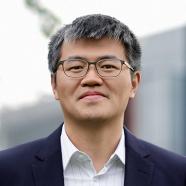
[Image changes to show the medallion in the centre and a photo of Associate Professor Fengwang Li on the right. Text appears beneath: Associate Professor Fengwang Li.]
Associate Professor Fengwang Li: In nature, plants just use sunlight to turn carbon dioxide and the water into complex molecules to support their life.
[Images move through to show signs pointing to the research labs, and then views of Fengwang Li putting on a lab coat and safety glasses.]
In our lab, we try to mimic such transformation with power from renewable electricity.
[Image changes to show a medium and then a close view of Fengwang Li talking to the camera. Text appears beneath: Associate Professor Fengwang Li.]
I'm Fengwang Li, Associate Professor at the University of Sydney.
[Images show the university building, Fengwang supervising a student placing an electrode into a machine, Fengwang talking, and students looking at a model on a computer.]
My research focuses on electrocatalysis, using renewable electricity to convert waste molecules into valuable chemicals and fuels, creating a net zero future.
[Images show model on a computer screen, Fengwang talking to the camera, a test tube being taken from a tray, and Fengwang wearing safety glasses.]
We were trying to recycle carbon dioxide, but the majority of carbon end up with the by-product carbonate, which is the carbon paradox.
[Images move through to show medium and close views of Fengwang talking to the camera.]
Solving the carbon paradox problem gives me excitement.
[Images show views of the system in operation, a close view of liquid bubbling in a bottle and Fengwang looking down at the machine.]
In our acidic system, we can achieve carbon efficiency as high as 77%.
[Images show graphs on a computer screen, views of Fengwang talking to the camera, and him writing a formula on a whiteboard.]
It gives Australia an opportunity to make molecules relevant to our daily life without the reliance on fossil resources.
[Images show views of Fengwang writing on a whiteboard, his students listening to him, and then a close view of Fengwang talking to the camera.]
Australia has greater potential to produce green hydrogen.
[Image changes to show a medium view of Fengwang talking to the camera.]
Storing and transporting hydrogen over a long distance is a grand challenge.
[Images move through to show Fengwang and other students looking at data on a computer screen, and then Fengwang talking to the camera.]
Traditional ammonia cracking to release hydrogen operates at high temperature.
[Images show a hand operating controls on the system, a graph on a computer screen, and views of Fengwang talking to the camera.]
Our electrochemical ammonia cracking technology to operate at ambient temperature and we can provide onsite hydrogen.
[Image changes to show views of Fengwang walking through a park, and then the image changes to show Fengwang talking to the camera.]
Receiving the Malcolm McIntosh Prize for Physical Scientist of this year is a great honour for me.
[Images show views of Fengwang writing on a white board, teaching students, students listening, a student writing on the whiteboard, and Fengwang talking to the camera.]
In our research program, we do not only provide technical solutions for Australia, we also care about how benefit the technology can bring to our society, our economy and the environment.
[Images move through to show Fengwang explaining something to students and Fengwang smiling.]
I want the next generation of electrochemistry can really make a difference to our daily life.
[Music plays and the image changes to show the Malcolm McIntosh Prize medallion on the left. The Coat of Arms and text appears on the right: 2026 Malcolm McIntosh Prize for Physical Scientist of the Year.]