Resources and energy quarterly: December 2025

Date published:
19 December 2025

Introduction

The Resources and energy quarterly (REQ) contains the Office of the Chief Economist’s forecasts for the value, volume and price of Australia’s major resources and energy commodity exports.

The publication provides:

  • a 2-year outlook for global commodity prices, demand and supply
  • up-to-date global production and consumption data
  • forecasts for Australian production, exports, volumes and prices of key resources and energy commodities
  • detailed statistical tables.

Overview

The outlook for Australian resource and energy commodity exports has strengthened, supported by rising gold exports and resilient iron ore exports.

  • The outlook for Australian export earnings from resource and energy commodities has strengthened, largely owing to surging gold prices since the September 2025 REQ was published. Export volumes are robust and are expected to increase to close to record levels in 2027.
  • World growth is relatively soft partly due to the hike in trade barriers in 2025. However, easier monetary and fiscal policy, and investment associated with the use of artificial intelligence and the energy transition, are supporting economic growth and commodity demand. Gold prices have risen as investors seek safe havens and interest rates fall
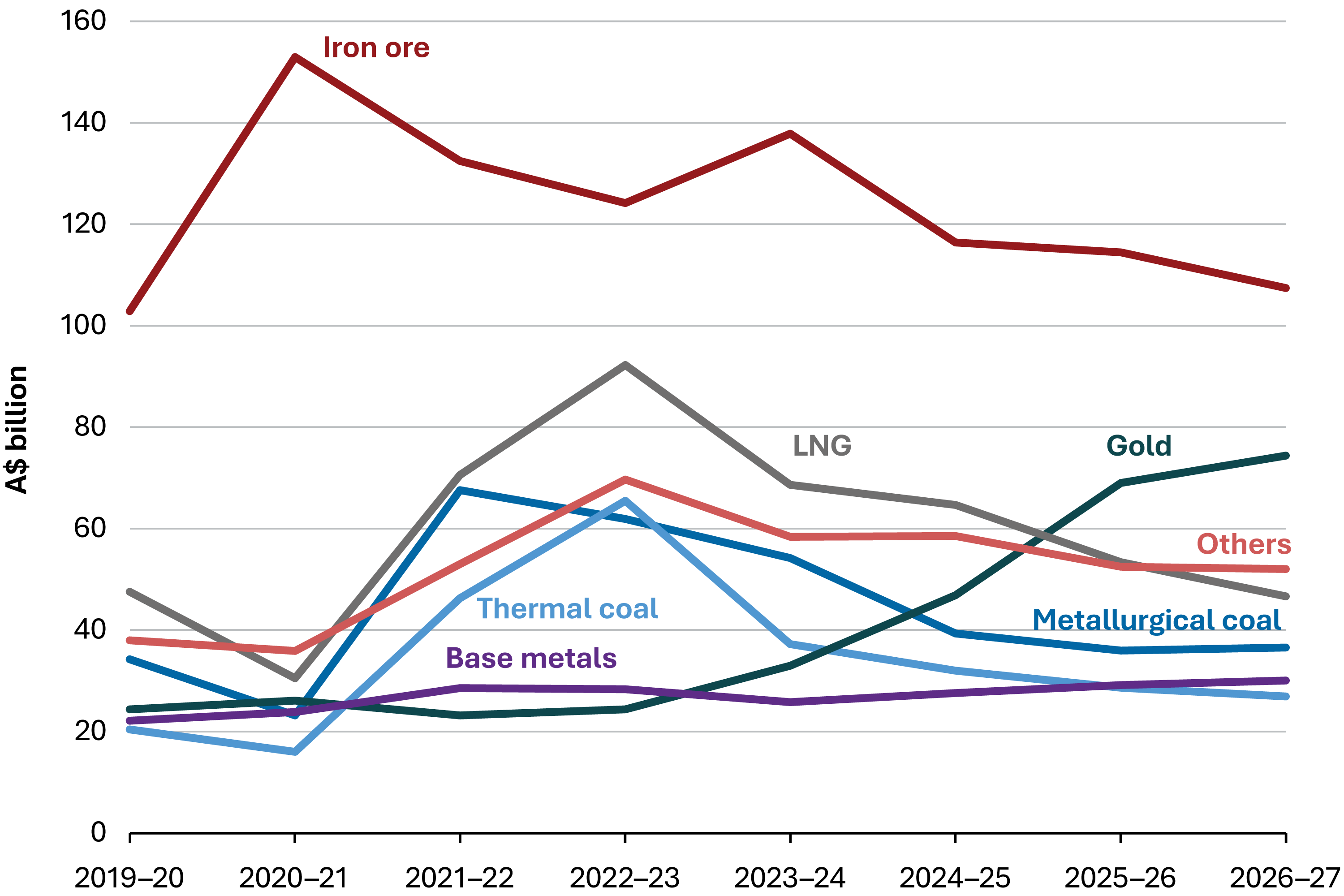
  • From $385 billion in 2024–25, resource and energy export earnings are now forecast to remain approximately constant at $383 billion in 2025–26 and then to ease marginally to $374 billion in 2026–27. Surging gold prices are expected to see gold become our second largest export behind iron ore.
REQ December 2025 chart - commodity values

Macroeconomic outlook

Growth in world economic output growth is forecast to slow from 3.3% in 2024 to 3.2% in 2025) with a further slowing to 3.1% in 2026. Growth is expected to pick up to 3.2% in 2027.

  • The global macroeconomic outlook has deteriorated slightly since the September 2025 REQ (output growth down 0.1 percentage points in 2025) with heightened US trade barriers impacting growth.
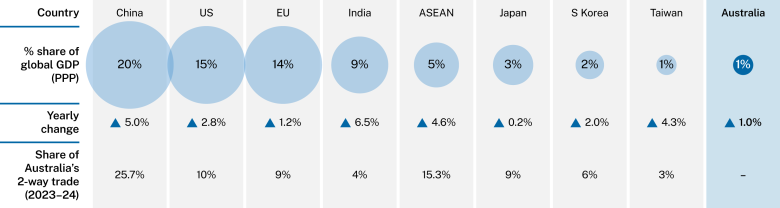
  • The Reserve Bank of Australia forecasts economic growth among Australia’s major trading partners will moderate with higher trade barriers.
REQ December 2025 chart - macroeconomic

Iron ore

Iron ore prices have been more resilient than expected at the time of the September 2025 REQ, despite week global steel output. Chinese steel makers have been building inventories. Prices are forecast to decline in the coming years due to rising supply from Africa, Brazil and Australia.

  • Global steel production fell in 2025, mainly due to reduced output in China and other major producers. However, India and Southeast Asia are expected to see strong growth in steel output in the coming years.
  • Australia’s iron ore export volumes are rising. However, export earnings are forecast to decrease due to lower prices, declining ore grades and a stronger Australian dollar.
  • Australia's iron ore export earnings are forecast to decline from $116 billion in 2024–25 to $114 billion in 2025–26 and $107 billion in 2026–27.
REQ December 2025 chart - iron ore

Metallurgical coal

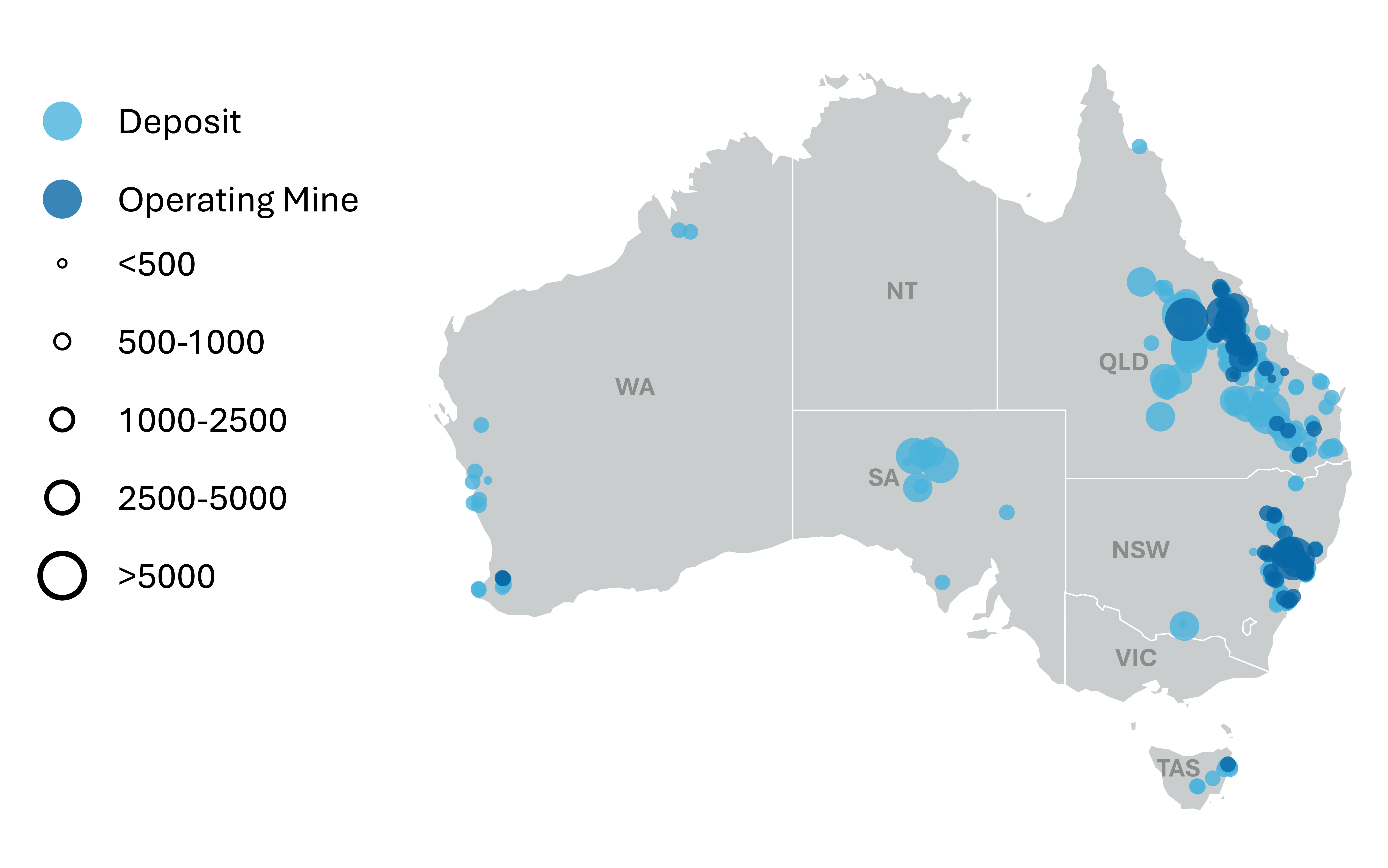
Metallurgical coal prices have been supported by restrained domestic coal supply in China in recent months. Prices have picked up modestly as the market shows some unexpected tightness. Earnings are expected to decline in the current financial year and remain little changed from earlier forecasts.

  • Prices are forecast to be flat through 2026, before increasing slightly in 2027.
  • Australian export volumes are forecast to increase to 150 Mt in 2025–26 and 161 Mt in 2026–27.
  • Earnings are expected to fall from $39 billion in 2024–25 to $36-37 billion in 2025–26 and 2026–27.
REQ December 2025 chart - coal

Thermal coal

Thermal coal prices are expected to hold largely steady over the next 2 years as demand and supply both gradually fall. The outlook for thermal coal is little changed from the September 2025 REQ.

  • Thermal coal prices are forecast to stabilise at around US$109/tonne in 2026 before rising slightly to $US113/tonne in 2027 as production costs rise.
  • Australia’s export volumes are expected to fall from 205 million tonnes (Mt) in 2024–25 to 202 Mt by 2026–27.
  • Export earnings are expected to fall from $32 billion in 2024–25 to $27 billion in 2026–27.
REQ December 2025 chart - coal

Gas

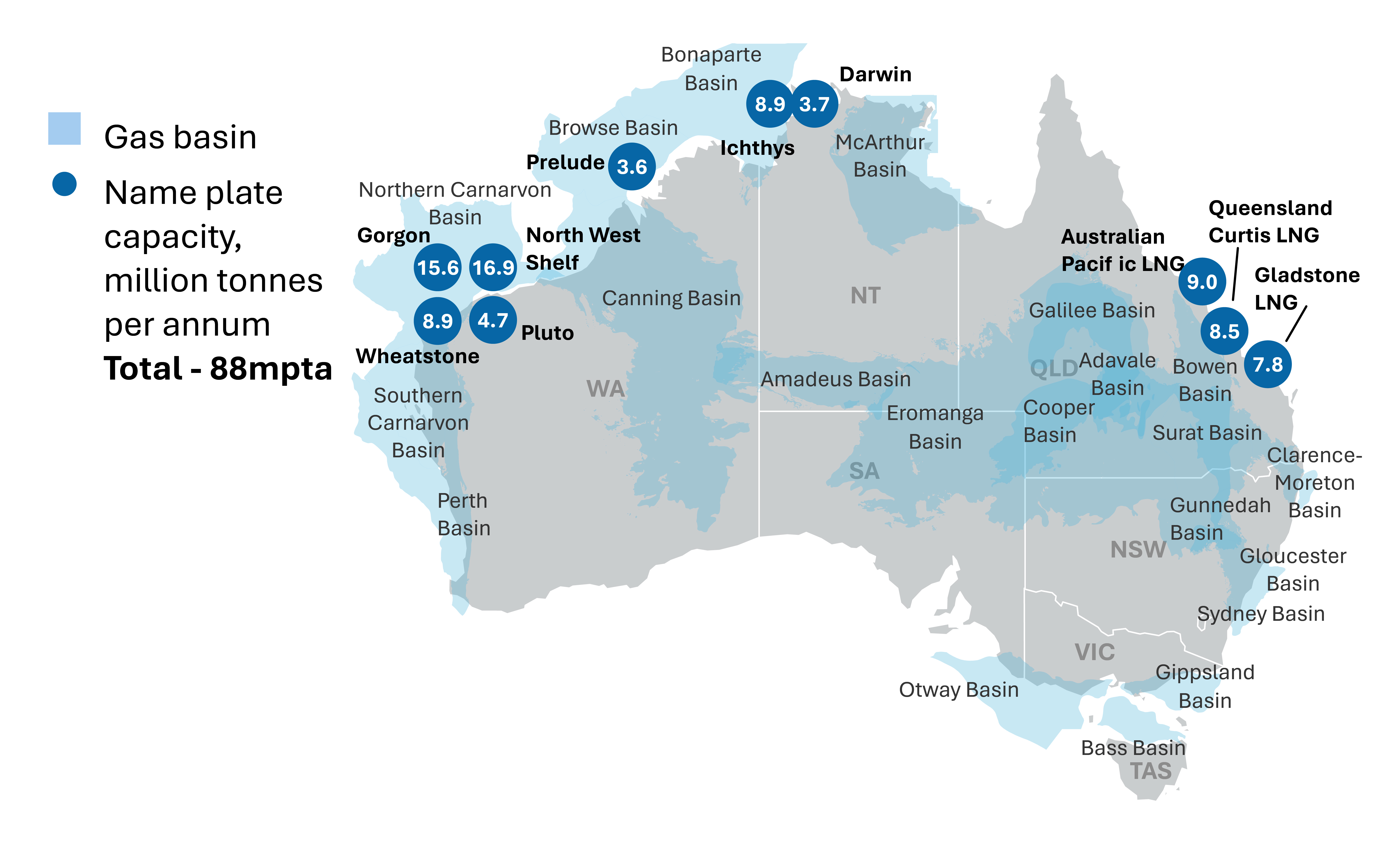
Gas/LNG prices and earnings should ease over the outlook period as lower oil prices feed into gas contracts and as LNG supply from the US and Qatar ramps up. Volumes remain steady, reflecting consistent demand for LNG in Asia. The outlook for LNG exports is only slightly weaker than in September, on the back of weaker than expected oil prices.

  • Australia’s liquefied natural gas (LNG) export earnings are forecast to decline from $65 billion in 2024–25 to $47 billion by 2026–27. The earnings forecast has been revised down from the September 2025 REQ due to lower forecast oil prices.
  • New supply from the US and Qatar is forecast to push down LNG spot prices from US$12.50/MMBtu in 2025 to around US$11/MMBtu by 2027. Prices remain highly vulnerable to geopolitical disruptions, delays in new project developments and weather events.
  • Falls in LNG export earnings are largely price driven in the short term. But gradual depletion at some reserves could weigh on volumes over the longer term.
REQ December 2025 chart - gas

Oil

Australia’s export earnings from oil are expected to fall due to strong global supply putting downward pressure on prices and Australian oil fields depleting. Compared to the September 2025 REQ, export values have been revised down slightly due to lower price forecasts.

  • Prices are expected to fall from US$70 a barrel (Brent) to US$59 in 2027 as a long-expected supply surplus begins to materialise.
  • World oil supply is expected to reach 108 mb/d in 2027, with strong supply growth expected in the Americas.
  • Australian export values are forecast to fall from $12.5 billion to $6.9 billion in 2026–27, as oilfields deplete and prices fall.
REQ December 2025 chart - oil

Uranium

Australia’s export earnings from uranium are expected to peak at $1.6 billion in 2025–26, supported by global supply shortfalls, rising prices and growing volumes. Slightly lower export volumes and a stronger Australian dollar are expected to reduce export earnings slightly in 2026–27. Overall, the outlook is little changed from the September 2025 REQ.

  • Uranium prices are expected to rise from US$73 a pound in 2025 to an average of US$91 per pound in 2027.
  • Rising nuclear power generation is forecast to increase uranium consumption from 91.5 thousand tonnes (kt) in 2024 to 99.5 kt in 2027.
  • Australian export volumes are forecast to lift from 5 kt in 2024–25 to 6.7 kt in 2025–26.
REQ December 2025 chart - uranium

Gold

Australia’s gold export earnings have been revised up strongly across the outlook period with production unchanged compared to the September 2025 REQ. This is due to higher forecast gold prices and persistent demand side strength from investors and central banks. Export earnings are expected to keep rising to 2026–27.

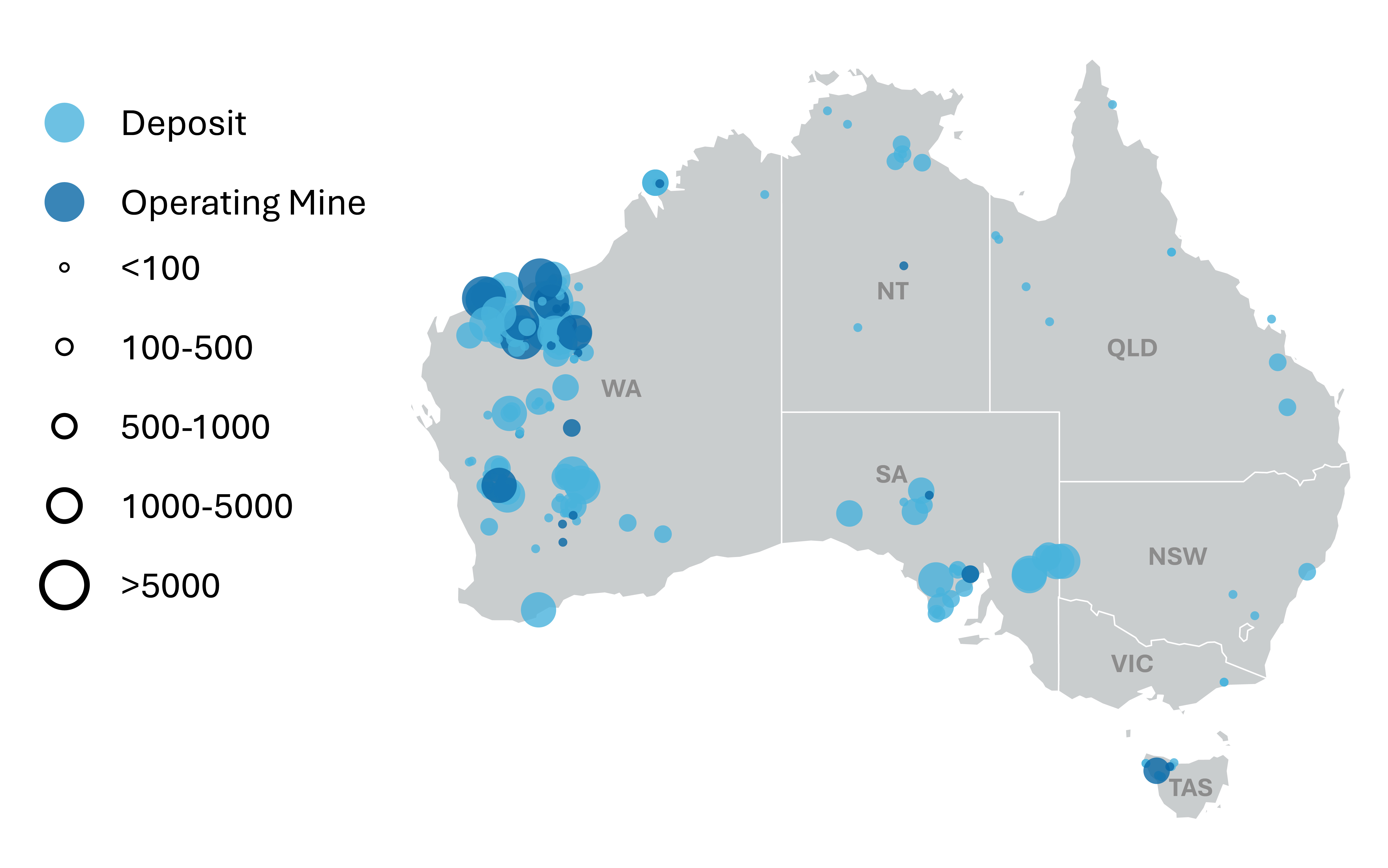
  • The gold price hit a new record in the December quarter 2025 above US$4,300 an ounce. This was driven by US official interest rate cuts and investors seeking safe havens on concerns over the fiscal and inflation outlook in the US. Prices are expected to remain high over the forecast period with a peak average price in 2027 of around US$3,790 an ounce.
  • Australian gold output is forecast to rise over the outlook period. Output will lift across multiple existing large-scale operations, and as new projects come online.
  • Record prices and rising export volumes are forecast to push Australian gold earnings to $69 billion in 2025–26 and $74 billion in 2026–27.
REQ December 2025 chart - gold

Aluminium, alumina and bauxite (AAB)

Australia’s aluminium/alumina/bauxite exports earnings have been revised up from the September 2025 REQ, reflecting higher aluminium prices and an expected recovery in alumina prices.

  • Aluminium price forecasts have been upgraded, driven by supply constraints in China and easing US-China trade tensions.
  • Australia’s alumina output for 2026–27 has been revised down by 6.3% from the September 2025 REQ, as Rio Tinto announced a 40% production cut at its Yarwun alumina refinery commencing in October 2026.
  • Australia’s bauxite exports are forecast to reach 45 Mt in 2025-26, as demand from China remains strong.
REQ December 2025 chart - bauxite

Copper

Copper market conditions remain strong, with high demand and strong prices expected over the outlook period. Copper price forecasts have been revised upward relative to the September REQ due to recent major mine disruptions and ongoing strong demand.

  • LME copper prices hit a record US$11,870 a tonne in the second week of December 2025, driven by tight supply and recent US interest rate cuts. In the second week of December 2025, the spot price was US$11,870 a tonne, up 21% from the September quarter average. Prices are expected to remain elevated throughout 2026 before easing in 2027 as supply constraints ease.
  • Global copper demand is expected to grow as the demand for clean energy technologies rises, and as data centres and electricity infrastructure expand. However, copper supply is expected to lag demand due to recent major supply disruptions and the slow development of new mines.
  • Australia’s copper exports are projected to rise from 765 kt in 2024–25 to 948 kt in 2026–27, supported by new mines and expansions. Earnings are forecast to grow from $13 billion in 2024–25 to $17.6 billion in 2026–27, driven by higher prices and export volumes.
REQ December 2025 chart - copper

Nickel

Nickel prices remain relatively weak, with only limited gains expected over the outlook period as the market gradually moves toward balance. Compared with the September 2025 REQ, forecast export earnings are largely unchanged.

  • The LME nickel price averaged around US$14,700 per tonne in November 2025, marking a 7% year‑on‑year decline and approaching its four‑year lows of US$13,900 a tonne. The downturn reflects persistent supply surpluses and weak demand from both stainless steel and battery sectors.
  • The LME nickel price is forecast to average US$15,860 a tonne in 2026 and increase slightly to US$16,770 a tonne in 2027. This gradual recovery is expected due to anticipated tightening of mining permit approvals and reduced export quotas in Indonesia from 2026, which could slow capacity growth and constrain supply.
  • Global demand is forecast to increase, driven by new battery pCAM capacity and a ramp‑up in stainless steel output from China and Indonesia, which could also support price recovery.
  • Australia’s nickel exports were A$2.3 billion in 2024–25. These are forecast to decline to A$1.4 billion in 2025–26 and A$1.2 billion in 2026–27, as domestic nickel production decreases.
REQ December 2025 chart - nickel

Zinc

The zinc price has risen recently on the back of tight refined supply markets, with demand and price forecast edging up slightly from September REQ, reflecting stronger manufacturing growth in major markets, primarily in Asia and Europe. The price is still expected to soften modestly, lowering zinc export revenue over the outlook period.

  • The zinc price is forecast to average US$2,940 a tonne in 2026 and ease slightly to US$2,800 in 2027.
  • Global supply is set to grow modestly over the outlook period, while zinc demand remains soft due to slowing global growth and continued weakness in China’s property market. Demand is forecast to grow at an average annual rate of 1.3%, reaching 14.1 Mt by 2027.
  • Australia’s zinc exports were $4.4 billion in 2024–25. These are forecast to decline to $3.7 billion in 2026–27, as prices soften and output from older mines tapers.
REQ December 2025 chart - zinc

Lithium

Modest increases in prices and production are expected to see lithium exports grow steadily over the outlook period. Lithium prices have been revised up marginally from September, but forecasts for global consumption remain largely unchanged.

  • Australia’s lithium export earnings are forecast to increase from over $4.8 billion in 2024–25 to over $6.8 billion in 2026–27, driven by growth in lithium export volumes and prices.
  • Global lithium demand is forecast to grow by almost 15% a year to 2027. Increased EV adoption and battery energy storage system (BESS) deployment are expected to drive this growth. Supply is expected to grow at over 13% a year.
  • The current oversupply in the global lithium market is not expected to diminish noticeably over the outlook period. Strong demand will not be able to absorb excess supply in the short term despite production curtailments and delays in new mines commencements.
REQ December 2025 chart - lithium

Other critical minerals

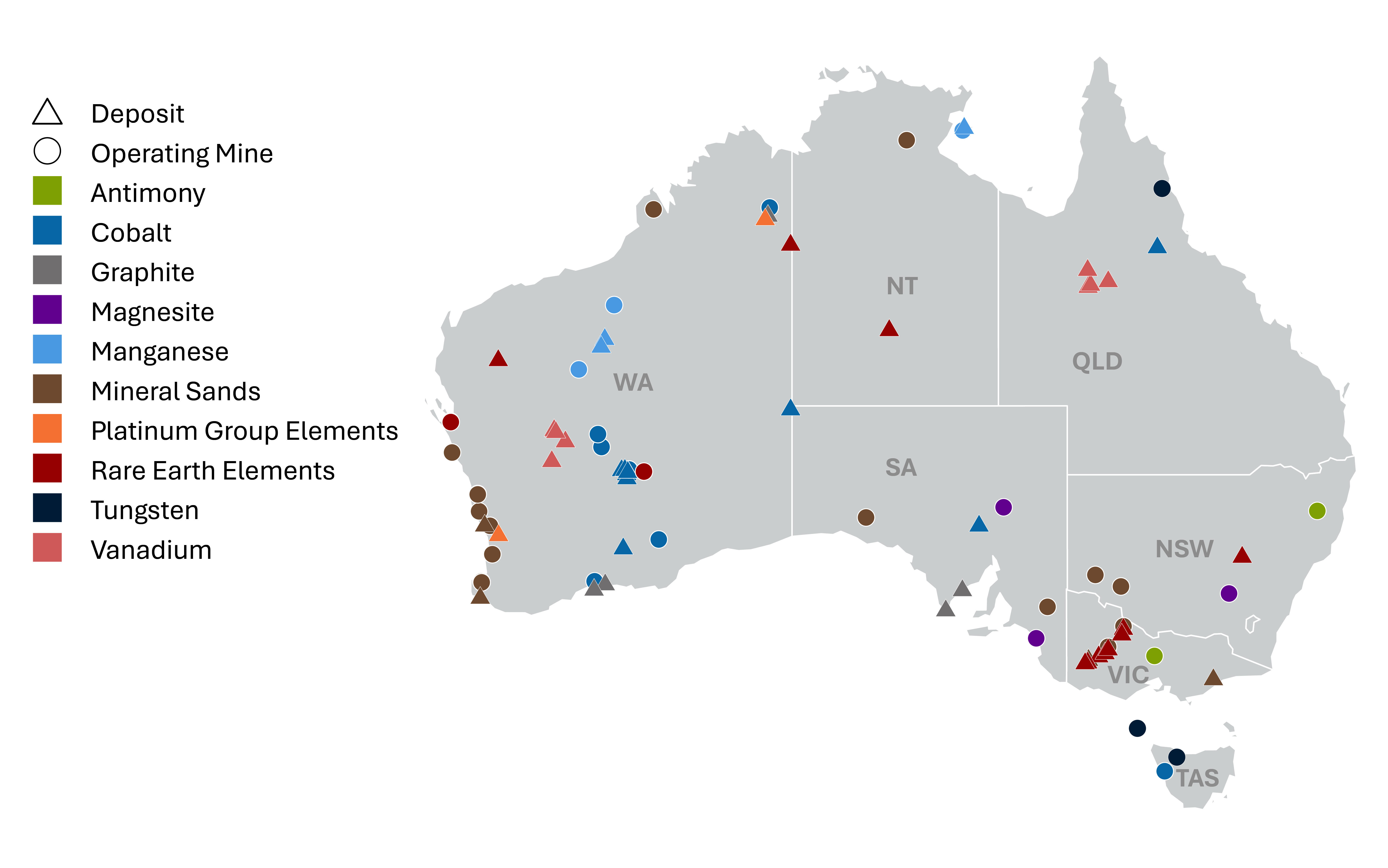
Australia’s export earnings from other critical minerals are expected to increase from $3.8 billion in 2024–25 to $5.9 billion in 2026–27. The addition of zircon exports since the September REQ has increased the value of ‘other critical minerals’ exports: if not for this inclusion mineral sand export earnings would have been revised down slightly in 2025–26 due to easing prices.

  • Manganese production is set to return to normal levels in 2025–26, following repairs to port facilities at GEMCO’s Groote Eylandt facility. Resumption of manganese ore exports and expanded rare earth production is expected to drive most of the increase in export earnings over the outlook period.
  • China’s rare earth export controls have been delayed by one year. These measures contributed to market volatility – despite the delay – as exporters delayed shipments while waiting for clarity on dual-use export licenses.
  • The US and Australia recently signed a Critical Minerals Framework to help build sustainable critical minerals supply chains needed for defence and advanced manufacturing industries. Both parties have committed to take measures to provide at least US$1 billion in financing to projects in Australia and the US within 6 months.
REQ December 2025 chart - other critical minerals