[An image appears of Distinguished Professor Lidia Morawska’s hands holding a prototype, images move through of a colleague with Lidia holding the device, Lidia talking to the camera, and text appears: Distinguished Professor Lidia Morawska, 2025 Prime Minister’s Prize for Science]
Distinguished Prof. Lidia Morawska: I couldn't quite believe just the fact of being nominated, that my colleagues thought that my work is so important. That was amazing.
[Images move through to show Dr David Khoury’s hand holding a texter and drawing a line, and then the camera pans left to show his face as he continues drawing, and text appears: Dr David Khoury, 2025 Frank Fenner Prize for Life Scientist of the Year]
Dr David Khoury: Prizes like this are really important.
[Image changes to show David talking to the camera, and then the image changes to show David’s hands using tweezers on a circuit board]
To know that your nominator thinks you're doing great is just such an encouragement to keep me going.
[Image changes to show Dr Nikhilesh Bappoo beside a large microscope, and then the image changes to show Nikhilesh talking to the camera, and text appears: Dr Nikhilesh Bappoo, 2025 Prize for New Innovators]
Dr Nikhilesh Bappoo: Often the best innovators just need that push.
[Images move through to show Nikhilesh looking at the microscope’s image on a screen, Nikhilesh looking at a circuit board, a medical device on a female’s arm, and the medical device’s screen]
Being nominated for a prize can be a career launchpad, something that gives a licence to accelerate your impact.
[Images move through to show Dr Vikram Sharma using a computer with test data, the computer screen, Vikram looking to the right, and views of Vikram talking to the camera, and text appears: Dr Vikram Sharma, Prime Minister’s Prize for Innovation]
Dr Vikram Sharma: You go along focusing on what's the next day or the next week or next month, and to find that one of your peers feels that it's worthy to nominate you and your team's work was incredibly exciting. It was humbling.
[Images move through to show views of Professor Yao Zheng working in a lab, Yao Zheng holding a square clear object with a brown square inside, Yao Zheng talking to the camera, and text appears: Professor Yao Zheng, 2025 Malcom McIntosh Prize for Physical Scientist of the Year]
Professor Yao Zheng: The Prime Minister's Prizes for Science is a very important recognition for your research.
[Images move through to show views of Yao Zheng smiling and talking with colleagues while walking outside, and then Yao Zheng looking at a bottle of clear liquid]
It's not only for your team but for how your research makes a contribution to the country.
[Images move through to show a range of views of Nikhilesh showing a colleague a flat black round object with a yellow centre]
Dr Nikhilesh Bappoo: It's all about promoting each other and promoting the great science around us.
[Images move through to show David with a colleague looking at pipettes, David smiling, David looking at photos on a computer, a graph on the computer screen, and David looking thoughtful]
Dr David Khoury: The science prizes are an amazing way to acknowledge important contributions to people's lives that might otherwise just go unnoticed.
[Images move through to show a male working on a prototype, the male’s hand adjusting dials on a medical device, the waves on the device’s screen, and then Vikram talking to the male]
Dr Vikram Sharma: If you know someone or a team that have dedicated their life towards pursuing science for the betterment of society, nominate them.
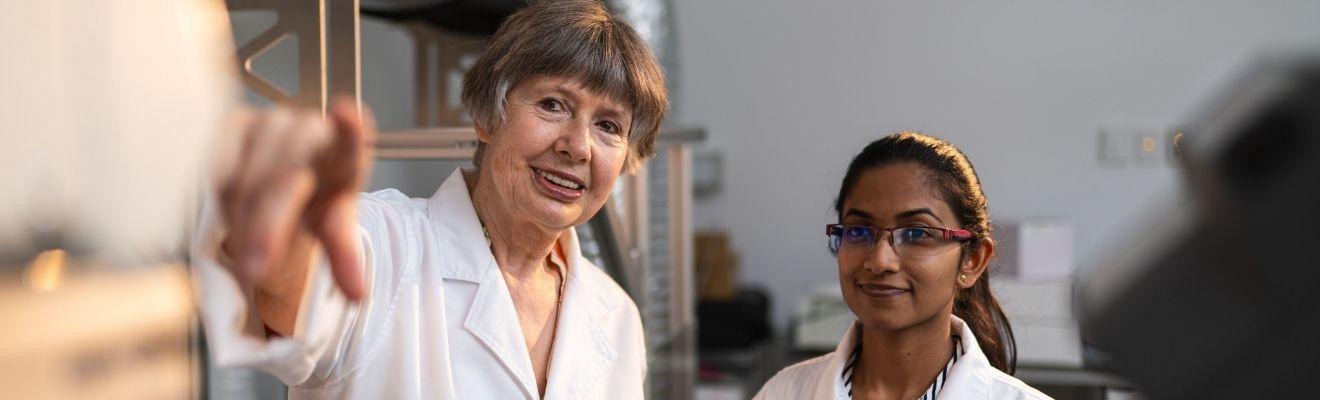
[Images move through to show Lidia with colleagues looking at a document, Lidia pointing at the document while talking with the colleagues, and then Lidia talking]
Distinguished Prof. Lidia Morawska: Nomination for the Prime Minister's Prizes for Science is extremely important.
[Images move through to show Yao Zheng smiling at the camera, David smiling at the camera, Nikhilesh smiling at the camera, and then Vikram smiling at the camera]
If you know somebody who deserves to be nominated, do it.
[Music plays as image changes to show Lidia smiling at the camera, and then the image changes to show a Prime Minister’s Prize Medallion on the right and the Australian Government Coat of Arms above text on the left: The Prime Minister’s Prizes for Science, 2026, Nominate an inspiring scientist or innovator today! industry.gov.au/PMPrizes, #PMPrizes]